How many cars are needed
7mon 19d ago by feddit.uk/u/Babalugats in fuckcars from feddit.uk
A 175m road scaled in reference to the 35m wide lane:

Quality contribution. I completely overlooked the relative sizes.
relatives 🥁
Yeah i was thinking that too, no way 175m is that narrow.
i mean yeah but how much of that energy can you get out of that uranium, and at what speed?
With about 200kg of the right kind, pretty much all of it quite quickly.
Isn't fission actually remarkably inefficient? It's just that extracting even a single percent of the energy in matter is enough to make it the most ludicrously powerful thing we can do
Can't be less efficient than boiling water.
Thank you for this, the picture was really bothering me.
Thank you! That really bothered me but I was also too busy (read: lazy) to illustrate it myself.
Okay, but if you look carefully at the top of the inverted pyramid, you'll notice that there are no homeless people allowed to participate.
Also, the bottom has no less than six trees which is Woke.
The whole thing stinks of socialism.
Like we should, idk, pool our resources to "improve" our lives or something....
Nah, I'd rather burn prehistoric forests in my trukk because I'm so free.
America, fuck yeah
"Now I'm gonna go roll coal just to own the libz"
I guess for bicycles, you'd get that down to about 7 meters. Estimated from heavily used bike lanes in Copenhagen where at rush hour two bikes per second pass (7200 persons per hour). Edit: Here is a video of bike rush hour in Amsterdam - try to count the number of persons passing per second.
Fun fact: The distance at which bikes with good paths are faster than metros / rapid transit / commuter rail, or light rail is surprisingly large. I commute to the center of Munich, 14 kilometers one way. It is about 50 minutes on the bike and 60-75 by light rail. And I go at leisurly speed. Plus the bike is much more reliable (outside of icy winter weather, where bike paths are not cleared).
Edit: I'd like to add that for bikes, you don't need necessarily need a single 7 meter wide connection. Four connections, each 2 meters wide, will do fine, too!
Thanks for that. I wonder if anyone has developed a rough algorithm for it? I'm sure it depends on the infrastructure. My city is maybe 25% designed for bicycles (optimistically) so I imagine it would score lower than a lot of modernized European metro areas. And that makes me sad.
The season just ended, but every Monday I go cycling though a different urban neighborhood with ~600 other people so hopefully we can make an impression and improve things.
I have seen web sites which show the estimated average travel time from one place in a color-coded map.
Practically spoken, you can compare the estimated travel time from public transit apps or google maps with rough route planning in openstreetmap.org.
Concretely, I use the https://brouter.de/brouter-webapp at my PC to plan commute routes, and set my own average speed (which is about 15 km/h - younger people with a bit of training might reach 20 km/h). (One could also use the OSMand app on the smart phone (or one of its open source forks), which underneath uses openstreetmap and brouter as well. But I find the phone display just too small to do that comfortably).
The trick for going fast, safe and relaxed along longer distances is to select routes with few intersections and traffic lights. In my case, around 35% of the daily commute is a cyclepath at the side of a motorway, 20% is along Munich's river Isar, much of the rest are so-called bike roads with reduced speed for cars which attract a lot of bike traffic in the city.
Oh, and if you ever need to commute longer distances outside cities, consider a velomobile (for smooth concrete roads) or a recumbent bike (for dirt roads). They are great for that and you get more speed for your energy.
Or just work remotely from home.
Yeah I had a commute through Boston US and the subway took 40-45 mins including 5 mins walk each end and the bike took 30-33 mins door to door. Subway was 50-70 for a while there when overdue critical repair work was ongoing. The subway route was straighter too.
the problem with bicycles is they are not weather proof. if it's cold or hot or stormy or hails, bicycles suck. then on top you're excluding people who are not physically fit enough to use a bicycle for more than 5 minutes. and that includes people with disabilities of all kind.
so you still need public transport options anyway. on days with bad weather, you can expect that at least 90% of people are gonna prefer public transport, so you have to size your buses and trams large enough to carry the full population anyways.
so now you already have full public transport. at this point, why bother with bicycles, apart from the fun and physical exercise people get?
that's why i conclude that bicycles are only for recreation/sports, not actually for mass transport.
the problem with bicycles is they are not weather proof. if it’s cold or hot or stormy or hails, bicycles suck.
You can certainly use bicycles in many kinds of weather. Because this is a world-wide forum, we need to be a bit more specific about the weather conditions:
-
You can ride bikes when it is raining, even heavily so. (Here in Germany, this happens less frequently than 20 years ago). Good rain clothes help with that.
-
You can also ride a bike during stormy weather, though one needs to be a bit more careful. Said that, I have lived in Scotland and Northern Germany (which often has stormy weather in winter), and have been blown off my bike only a single time in, wait, over 40 years. And no, I am using bikes all the time - I never had a car.
-
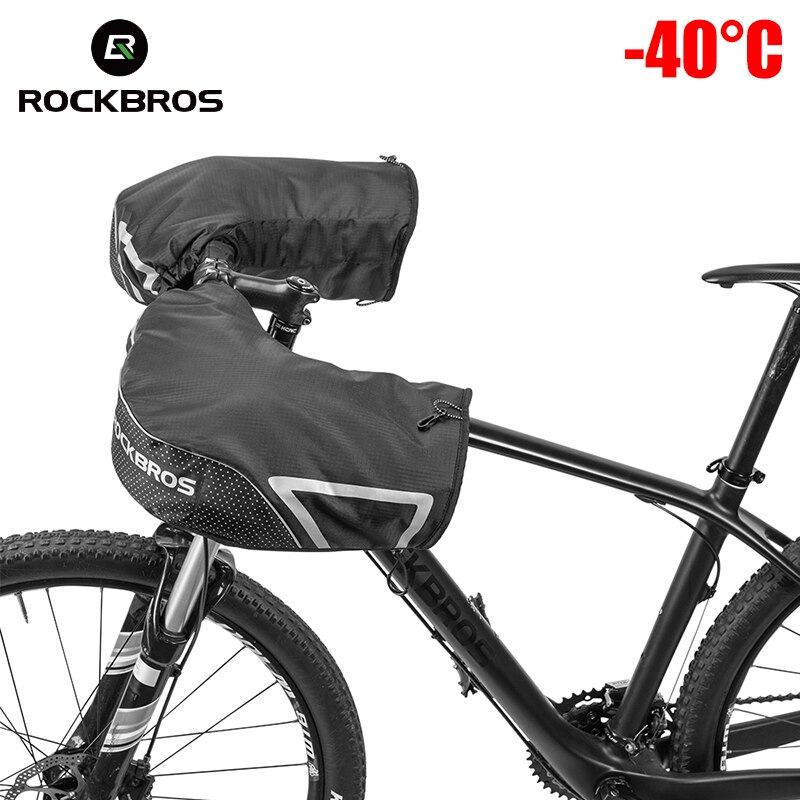
You can also ride bikes in quite cold weather - they are popular in Finland even in deep winter. What you do need to do then is to protect your extremities, especially hand and feet and also the face, against the cold. I use bar mittens (like these) for long rides in temperatures below - 10° C, and I find them super comfortable. If the road is a bit icy, studded tyres are great! In Germany, not much people use bikes in icy weather but this is mostly due to bike paths not cleaned from ice by the municipal road service, snow is melting and freezing again for days so that they can not be used in a safe way. In Finland, things are different, and bikes are used even in deep winter, as a preferred mode of transport.
-
The limit is probably for extremely hot and humid temperatures, like are frequent in India, East-Asia, and some parts of Brazil. Here in Southern Germany, we rarely have above 33°C and perhaps 60% humidity, and being on the bike is still more comfortable than using a bus with poor ventilation, and much more comfortable than using a car without AC. Actually, I have now read several times of incidents in summer where AC was broken in very full trains, but never of any health damage a person took because of commuting by bike in hot weather. That's because the movement provides ventilation by the headwind, and ventilation cools (at that European level of humidity). (One more funny thing is that in Germany, AC in cars became only popular in the last 15 years or so. Now, some people are saying that on a bike, you "get too sweaty" for working in an office in Summer. That's funny, because entering a car without AC on a warm day was always like entering an oven, but nobody ever suggested to use the bike instead because it was less hot. All in all, that is just one of the many ways how people use made-up arguments to rationalize decisions that maximize their comfort, but are bad for their health).
then on top you’re excluding people who are not physically fit enough to use a bicycle for more than 5 minutes. and that includes people with disabilities of all kind.
I think you are making a mistake here, and this seems to affect the central point of your argumentation: You are assuming that somebody is demanding that a whole city uses either bikes or public transport, in an exclusive way. In reality, bikes and public transport are superb complements. Reasons for that include speed, economical factors, travel time, last-mile connections, urban life and more. Last not least because public transport in metros is two orders of magnitude more expensive than bikes, and therefore always limited in capacity. You can see this is way: Each time you are using a crowded metro, bus or street car, when you could as well go by bike, you are taking away a place from an perhaps elderly or ill person which really needs it.
In contrary, cars are not helpful for disabled and elderly people: Not only they can often not drive them, but they take away walking space and make their transport less safe.
so you still need public transport options anyway.
Of course, nobody was saying that one should exclusively use bikes! This is a strawman argument.
on days with bad weather, you can expect that at least 90% of people are gonna prefer public transport, so you have to size your buses and trams large enough to carry the full population anyways.
That depends a lot on culture and also on whether you have safe bike paths. Generally, normally rain, warm or cold weather does not impede cycling. What is making the difference is safe infrastructure and ways. One can see that clearly from the enormous rise of popularity of using bikes in Paris, once the necessary safe infrastructure was there.
so now you already have full public transport. at this point, why bother with bicycles, apart from the fun and physical exercise people get?
Again, bike and public transport are great complements - public transport will always be needed for elderly / disabled / ill people, and commuting or travelling large distances, and bikes are more economical, faster, and more convenient for shorter distances.
that’s why i conclude that bicycles are only for recreation/sports, not actually for mass transport.
Looks like you never have lived in a city or culture where the bike is a normal mode of transport. I guess you are American?
(And yes, I am aware that a community like this one which discusses alternatives to fossil-free transportation, might be frequented by poorly-informed people and also be targeted by astroturfing and 10-cent armies directed by the fossil fuel industry... one sees this in every discussion on climate protection.)
(And yes, I am aware that a community like this one which discusses alternatives to fossil-free transportation, might be frequented by poorly-informed people and also be targeted by astroturfing and 10-cent armies directed by the fossil fuel industry… one sees this in every discussion on climate protection.)
downvote for insinuating that i'm a paid bot of the fossil fuels industry for disagreeing with you.
You were insinuating that cycling in the rain like here does not exist or is not possible.
That's bullshit.
Which leads to the question why are you telling such things?
And why I immediately think in astroturfing when I read such statements - I have seen them many times always when the discussion was how to reduce car dependency. And what raises my suspicion is that they come as (incorrect) fact statements, while at the same time they mostly emotionally appeal to discomfort - especially to people which do not know the situation by own experience. The thing is that when moving on a bike, factors like rain, cold or warm weather are actually much less uncomfortable than when you are standing outside, waiting for a bus, or sitting in a car. Because the movement warms your body in the cold (you need far less clothing than when hiking), and in warm weather the movement through the air boosts evaporative cooling.
So, the whole statements looks to me as if geared toward dissuading people which lack own experience.
somehow the dutch seem to get by just fine cycling in the rain, despite also having good public transport..
You're not made of sugar, and there's no bad weather only bad clothing.
Infographic not to scale (for some reason)
One should include bikes and also costs per person per journey. Will probably need logarithmic scale.
My limited experience with public transit in Texas is that it costs way more for me because I still have to drive 25 miles to the train station, pay 10 bucks to park, pay another 10 for the train that only comes like 5 times a day, walk the last mile in 110 degree heat, and come back earlier than I'd like to catch that final train trip and then pay for a new window for my car because someone broke into it.
Seriously - we suck at transit here.
That pisses me of too. Especially since cars are even worse than the infographic makes it look like.
A very large blender and a single water truck.
or blended and sent down a tube! then you get reconstituted into a person at the other end of the pipe.
who needs the train.
*reconstitution methods tbd
Isn't this pretty much how the teleportation tech in Star Trek works?
their version is a bit less moist
Commuter smoke. Don't breathe this.
I'm afraid I don't understand your comment, my good sir. Nothing has ever happened in Tiananmen. Certainly not in 1989.
Very much not proportional this representation.
How about for bicycles?
Just 1 tandem bike with 50,000 seats

And, once again, we re-invent the bus.
Heheh. I know enough compsci to appreciate that from a data structure perspective. Cheers.
that's gonna suck for the last guy on the route
It's fine, it's only 49,999 farts at most
So instead of a quint bike you get a quindecuple bike?

Who's Barry Badrinath?
That's several bikes per second. One hour has 3600 seconds.
1 meter wide road with one ebike attached to 10 trailer behind.
Forget the electric part, you could develop some killer quads hauling all that.
Helsinki just had 0 traffic deaths this past year because they focused all their funding on improving public transportation and bike lanes, disincentivizing car use, and punishing motorists who use their phone or speed by setting up cameras.
I sure wish somebody would look at that incredible success story and try to emulate it here. Unfortunately, public transit seems to be getting less reliable over time instead, which just encourages more car use.
Where's "here"?
America?
USA.
We just got seatbelt/phone use cameras in Canberra, Australia. We've had stopped cameras for more than 20 years, most now average your speed over several kilometres (on one highway for a couple of hundred kilometres) and disincentive speeding effectively
Whenever someone brings up a European city like this, they seem to ignore the fact that the entire country of Finland is roughly the size of the state of Montana. It's like comparing apples and oranges.
Okay? We can still compare Helsinki to a similar sized American city. I don't see how that's unfair.
The greater Helsinki area has literally more than 20% of the entire Finnish population, and way more people than the largest city in Montana (Billings)
So, how exactly is what you said even remotely relevant to anything?
Public transit makes a lot more sense with so many people in one area, that's how.
On the other hand, the population of Montana is a lot more spread out, so having effective public transit is more difficult for various reasons.
Some say that cars represent freedom and the ability to go where you want when you want.
But tech oligarchs want to destroy that, too. Basically by having their cars require a connection and monitor your every movement within the car and where you are going and when. They also are obsessed with self-driving cars because they then would have more control over your movements.
In short there will BE no plus side to having a car in the very near future. They are enshittifying everything.
If it wasn't so dystopian, I'd be for it. Self driving cars that you can book as needed would require less space be devoted to parking and one vehicle could serve as transportation for more people. Combined with easy and accessible public transit and thoughtful pedestrian and cyclist-friendly city design, being less reliant on vehicles sounds like a dream. If you could book the equivalent of an Uber and have it be available within 5 minutes for a reasonable price, why wouldn't you? In such a scenario, cars would only be for hobbyists. Those who aren't able to drive (elderly, people with disabilities) would have more equitable access to, well, anything that requires you to physically be somewhere.
Truthfully though, I don't see a place where capatilism would allow this to happen. Selling everyone their own vehicle, with their own maintenance fees (and now subscription fees), accessories, fuel, etc.. is way too lucrative.
i maintain that in a sane world any even vaguely urban area would have transitioned to rideshares as the standard way of using a car 10 years ago.
It's just objectively better in so many ways, even if you want to drive to work every day you can just get a smaller car for that and rent a larger one whenever you need it.
Metros are good for extremely heavy lines and lrt/tram/whatever other similar form of transit is good for convenience and accessibility(that even well built cities often ignore...) but the king is still bikes in my opinion. I live in a city of 150k so its quite a bit smaller than most places where youd have more mass oriented transit but its still interesting to see that the fastest path to city center is with bike. Not bus, not train(except if you live right next to it) and not car.
The main problem i have with any personal vehicle is that you have to bring it with you, which IMO is a pretty severe limitation in many cases.
Bike/scootershare systems are great for this reason, they let you combine the convenience of micromobility with the flexibility of not having a personal vehicle. For example if you live on a big hill you could take the bikeshare downhill, then going home when you're all tired you can just hop on public transport home. Best of both worlds!
Yeah i agree. Funny thing is, judging from your name youre swedish, and i actually live in sweden and where i live actually happens to be on a hill. Because there is no bikeshare service here a lot of people use electric bikes but i like to suffer so i just have to get back up somehow.
Now do it with lifted pickup trucks assuming 1.25 seating capacity use
9m wide?
Those are some fat train tracks. Usually they're barely over 1m wide.
I’m guessing they include all the necessary infrastructure, not just the tracks themselves. And it does say “in each direction”, so we’re talking two tracks.
Honestly you're in the 11-15m range in most cases, because you want lineside equipment (signal cabinets, masts, cable routing etc) and ideally a 4WD path for maintenance access.
9m is doable but you don't built an entire system like that unless you really have to. Equally, your roads have hard shoulders and crash barriers.
Checks out:

Standard guage rails are 1.435m wide, plus surrounding space because trains are wider than rails plus a second track.
I'm curious about the numbers for tram.
Somewhere between buses and trains.
Not sure about English terminology but I thought tram and metro are the same and it's small trains that go on the street or maybe have a separate lane?
Tram (also known as streetcar or trolley) usually goes on rails in a street that is shared with cars. A metro (also known as subway or underground) usually has it's own separated tracks that are often underground or elevated.
While 'trolleybuses' are electric buses which get power by wire. They have the advantage that they are far cheaper to set up than trams, while providing less capacity.
'Light rail' is yet another term for tram
Metros are also called subways or undergrounds.
There are some cities where trams function like metros (have dedicated tunnels for part of the route), but usually the two are separate systems, with different types of rolling stock.
Metros usually go faster than trams, because they don't interact with other traffic, and have less frequent stops.
TIL thanks! We have the same difference in German. I just matched metro to the wrong one.
interesting. i think in our city, trams and metro are not clearly separated. parts of the trams' tracks run on their own lane, while other parts mix with the other traffic.
When it comes to anything on rails it's all VERY arbitrary and hard to define, but probably the single most useful and objective line you can draw is between systems that run on line-of-sight (like normal, cars/buses/bikes/walking) and systems that run on signals (99.999% of trains do this, the main exceptions being in places like depots and yards where the trains will go 40km/h max so they have time to stop if needed).
Other than that, "tram" almost always means it's a smaller vehicle (primarily in width, but they're also usually shorter as well) and it tends to at least partially run in/next to the street like buses do.
I was gonna say people need to sacrifice for the greater common good but then I realized what community this was and knew people were on my same wavelength.
How about a subway?
A subway is a metro line located underground. Throughput is the same. Its just more expensive to dig the tunnels
this is why you contract out the tunnel construction to past you, when labor was cheaper. worked in london, nyc, paris.... hell of a trick
NYC, home of the $2b price tag for a km of rail.
$2b today, but if you just use 1920s labor.... EH? IT'S FREE TUNNEL REAL ESTATE
A subway is the American word for metro surely? And London's is generally called The Underground.
The first metro to be called a subway is in Glasgow. They tried to rename it the Glasgow Underground to match London, but reverted to the old name when nobody used the new name.
In practice, throughput is not the same. There are fewer cars underground that just park on the tracks, fewer traffic accidents, demos etc. Subways make you independent of almost everything that happens above ground. When Beijing introduced the subway system, that first allowed people to estimate quite precisely when they would arrive at their destination.
Also, fewer people plan to build a park underground or use that real estate otherwise. So the above-ground use of space is restricted to the station entrances. The calculation would even be different in places like Seoul, where the subway system doubles as a public bunker system.
You seem to think of a tram. A metro is grade separated. So nothing, but the trains should be on the tracks at all times.
So this for example is a metro, but not a subway:

Can the roughly 1000 people per minute board the metro in a minute?
Or rather, since there are 2 metros in 9m, and traffic in all directions, can 500 people board a metro in a minute if another 500 people have to unboard first, or just 100 if not everybody uses the same stop?
As you said, not every one of the 1000 board/unboard on the same stop. So, let's analyze your 100 per stop figure: The modern (subway) trains that I use daily can carry 1000 people, are roughly 120m long, and have 18 double doors per side. That's like 6 people per door, totally doable.
Usually these systems rely on people getting on/off at different stops, rather than one stop seeing full volume. If it's one stop, chances are it'll look like a terminus station and you'll need several platforms and possibly dual-side boarding to each train. It'll be quite a bit wider than tracks with no station, or a minimalist station.
This is pretty common at major sports arenas.
The same of course applies to other transit options: high-capacity bus stops take up space, and motorway interchanges and especially carparks also take up a lot of space.
If you want to account for boarding platforms in the metro example, you also have to account for the parking in the car example to make a reasonably fair comparison.
Usually these systems rely on people getting on/off at different stops, rather than one stop seeing full volume. If it’s one stop, chances are it’ll look like a terminus station and you’ll need several platforms and possibly dual-side boarding to each train. It’ll be quite a bit wider than tracks with no station, or a minimalist station.
yeah, on the tram line i typically take, we have like 1 stop where lots of people get on/off, like 30 people per door, and it always takes 1-2 minutes to unload all the people/new people to enter. i think it's just outright planned-into into the route's timing plan.
Have you ridden trains? Like, commuter trains? the NYC subway handles millions of riders per day. The trains have many doors.
Not a problem. Stations where a lot of people board and unboard at the same time have sometimes platform where one side is for boarding, and the other for unboarding. Plus, trains can have more doors per car.
Yes, these kinds of transfer numbers are easily possible (even though other posters have said you don't actually have 1,000 getting on or off at one stop). As an example, consider the subway of Toronto, Canada on its busiest line, Line 1. A subway train is 138m (450 ft) long with 6 cars (though there is no internal barrier between cars) and a capacity of about 1,500 people. Each car has 4 door sets per side, and these door sets are about 1.5m (5 ft) wide. People can easily fit through them in pairs, so moving 4 or more people per door set when in a rush is very doable. With 24 door sets (only one side opens at a station), that's 96 people entering or exiting per second, so 10 or 11 seconds for 1,000 people. If you think 4 per second per door is too optimistic, then it's 1,000 people in 20 seconds.
a 175m wide road would be well over 35 lanes of car traffic, closer to 58. Not 7.
Just as a 9 meter wide space for metros would be just for metros.
That's a wide track...
id wager that in toronto, you could build all the subways and LRT and trains, and the road traffic would stay the same. people don't look at cars just for convince, its a cultural thing in north America, that your life is sorted out, like having a house, a good job, savings/retirement fund. people look and treat you weird if you don't have a car or can't drive (ask me how i know that)
People ARE assholes like that, but they will take nice public transit if it's convenient. Especially if you want to have a drink or two going out or to a friend's house.
Sometimes if it's really convenient people take it instead of driving in rush hour which helps everyone!
you would be surprised how many people drink and drive. im telling you, unless there's a dramatic shift in culture around transportation, or the next generation realizes that cars aren't a great thing to be using, if someone can get a car and a license, they will do so as soon as possible, its so engrained even some jobs require you to have a license. People will use that lame duck as a excuse to get one.
That's why road diets and reducing road capacity is also important. Like Amsterdam, Copenhagen, Madrid or Vienna, the space dedicated to cars also have to be reduced in order to incite people to use something else than a car.
they tried doing that in a stretch of toronto and it was removed as soon as it was put up, the drivers just have that much leeway here
What kind of subway would that be? Larger than I thought at first and with more than one or two train cars.
Paris's RER A is an extreme example, with 10-car double-deck trains moving 2,600 people, ~30 trains per hour. More than a million daily journeys.
The Victoria line is a more frequency-heavy system, with 8-car single deck trains at 1100 passengers at 36tph, or 40k PPHPD.
Fully underground systems usually have shorter trains due to the constraints and costs of building longer underground platforms.
Who is gonna get the metro to pull my fishing boat out of the water?
The problem with mass transit is that each person can't go directly to the doorstep of each specific place they need to be. And they wouldn't be able to haul a whole lot of stuff like a week's worth of groceries & dog in a kennel on its way to/from veterinarian appt, & 5 children & lumber from Home Depot.
I keep seeing people bring this up but what really annoyed me is people think they need to do all that 100% of the time while in reality they do it like once a month or even a year, and the proceed to use that excuse to bring down any proposal of a mass transit. Mass transit is not there to solve everyone's problem, it's to solve the excessive use of car that given people 0 preference other than owning and using a car, and making city worst, and also affect the experience of people that do need to drive.
People who do that often don't think far ahead.
Honestly, in a denser city focused on transit and not cars, and without shit zoning laws, these aren’t really problems for most people.
You should have a supermarket, school and other essentials within walking distance of your home. Even the vet, hairdresser, etc. That’s what a human, livable city is like.
Mass transit can get you close enough. Walking 10-15 minutes to your destination is good for your health. Especially for seniors. We wouldn’t have such an obesity crisis if people got up and moved more. Humans are built for walking.
Who the heck is hauling lumber every day/week? It’s cheaper to rent a van/truck for the couple days a year than it is to own and maintain a car. I bet the lumber yard has a delivery service.
If you have 5 kids and need a car to take them places, great, cars still exist. If you have mobility issues, cars still exist. If you live in the countryside, cars still exist. But I think these cases should be exceptions to the rule. Most of those 50k people who are just commuting to work every day could be taking public transit and contributing to a more livable city.
Yeah as someone that lives in a city with mass transit, you change your habits.
You shop two or three times week at somewhere in walking distance. You walk to the vet, and you order lumber online with next day delivery.
If I genuinely need a car, there's one parked in the next street I can rent with an app.
On top of that parking here is a pain in the arse, and the average traffic speed is something like 7mph.
This would make sense if anyone was going to ban all cars, when generally the idea is to drastically scale then back for when they're necessary while making less inefficient modes more useful and attractive.
Before cars, people often just died because they couldn't walk
Yeah I'm so glad walking was invented after cars started roaming the earth
/s
Are you a moron? I have a car. I go to work every day with a bike. I take my children to daycare with my bike.
I go to large market with my car once a week. I go to vet a once a year. If i order large quantitys of anything building related i order it straigh to home.
You could have said all that without asking me if I'm a moron. What was the purpose of that?
I'm envious of your lifestyle. But my lifestyle is such that I am constantly traveling 2 hours North 2 hours south 6 hours East driving 70 mph every Which way, a bicycle would not get me to all the places I need to be, I would drop dead from exhaustion and weather exposure if I tried to bicycle to all the places I need to go. You are fortunate you have found your happy place and it's all within bicycling distance.
You are right. I had a bad day. Sorry.
But i havent found my happy place. I live in a city that has build so people can use bike as a commute.
We dont have massive suburban areas or megamalls that makes cars necessary. Also both pedesterian and public transportation has huge part in the citys layout.
Of course people in rural areas and people whose work necessitas driving to different locations are always going to need cars.
Not everyone has such needs, city transport could basically get you anywhere, though yes, it's slower.
Perhaps we could get some better car rental, and just end up reducing traffic (those buses still need roads). I mean in similar way to bikes and electric scooters, but add chargers throughout the city and do the same with EVs.
If you’ve ever tried to drive across London (UK)… it takes 1 hour to get across the city by tube. 2 hours by car. Transit isn’t always slow!
The new REM in Montreal can go highway speeds, too, and usually crosses the bridge faster than the cars especially during peak times.
The tradeoff is time waiting for the train, and destinations available to you. I hate people way more than I hate cars, so cars it is. Personally I drive 2 cars to work with my left butt cheek in one car, and my right butt cheek in the other car just to be extra inefficient.
You need to invest in self driving cars so we can have empty cars taking up road space too.
poe's law is real and i can't tell if this is sincere. It's so cliche I think it might be a joke, but some people essentially are sad little jokes so maybe it's real.
There should also be something like "slop's law" for "any post on the internet might be AI slop, or might be trash hand crafted by a person"
Obviously the second half was being sarcastic.
I'd be okay with people being ticketed for driving trucks with only 1 passenger and not using them for hauling anything. I'd love to see smaller cars on the road that were designed to only hold a single person and be as efficient at that task as possible.
Trains, and busses, are a huge tradeoff in time savings. And have you seen the types of people who take trains/busses? No fucking thanks.
I’d be okay with people being ticketed for driving trucks with only 1 passenger and not using them for hauling anything.
Well, we agree on this at least. I live in NYC and most of these huge trucks are a unnecessary menace.
And have you seen the types of people who take trains/busses? No fucking thanks.
That's kind of a fucked up sentiment, honestly. I live in an area that has a working transit system, so it's people of all walks of life. Rich assholes ride the train to their high finance job right next to the working class folks. People commute in from NJ and CT because it's faster, easier, and cheaper than driving.
People who drive when there's transit available, without a good reason, are assholes. "I don't want to see poor people" is not a good reason.
Trains, and busses, are a huge tradeoff in time savings.
Also, lol. I can pay $3 to ride the train to midtown in ~40 minutes. Or I could drive, and deal with all the pain points of traffic and parking and take... ~40 minutes. I'll take the train and read, thanks.
I can pay $3 to ride the train to midtown in ~40 minutes. Or I could drive, and deal with all the pain points of traffic and parking and take... ~40 minutes.
That's great if your life is so droll that anything and everything you do fits within a 20sq mi radius.
You can't take a train to go spelunking a mountain cave. Cars win in point-to-point flexibility, and freedom of travel on your schedule, not the trains.
If I want to go somewhere at 3am, I can hop in my car and go. It's more common for trains to run from 5am to Midnight, and I'm a night owl.
Everyone who argues against cars always forgets that not everywhere is a densely packed city. Many of us like to travel much broader ranges. Sure, some NEET doesn't care about that freedom, but plenty of us do. Many of us live in mountain ranges and trains aren't exactly some great solution here.
Droll? You're saying New York City, one of the cultural capitals of the world, is droll?
Most people aren't going spelunking every day. They go to work. They go to the grocery. They go out to eat. They go out for drinks. You shouldn't need a car for that. You definitely shouldn't drink and drive.
No one is seriously arguing for getting rid of all cars for all people in all case. The focus is making them no longer the default. People who do need to drive for whatever reason will have a better time because there would be less traffic.
But really this conversation goes the same way it always does. People propose mass transit to solve the day to day for most people most of the time, and some people say it won't work because of corner cases and "I don't want to change anything".
Every person is their own corner case. Cars solve those corner cases. And yes, droll. If all you do is work, home, work, home, work, home...that's droll.
That's not what corner case means.
And that's not what city life is. There's music, food, art, museums, cinema, theater, street fairs, cultural events. All of that fits in a city, in a few square miles, because cities are dense.
Why do you think city life is just work and home?
so cars it is.
I fucking hate people more than you do, trust me, but your rational doesn't support your conclusion. unless your point is "i hate people so want to aid in destroying the planet so we all suffer" which, i guess, is an option.
a real asshole option. gigantic supperated scabbed over sphincter of a bloody discharge of an option but sure, you do you
Nothing like rush hour to get away from people and their bullshit, amirite?
Personally I drive 2 cars to work with my left butt cheek in one car, and my right butt cheek in the other car just to be extra inefficient.
i'm not sure whether the whole comment is satire or not.
What is this nonsense? We're better than that
What nonsense?
50k PPHPD is near the top of what can be easily achieved in a metro with one track per direction, but certainly achievable. 2x4m wide tracks and some space for ancillary equipment and fencing is reasonable.
You get maybe one passenger per two seconds in a car lane, or about 1800 per lane per hour. That implies 28 lanes each way, 55 total, or about 165m assuming 3m lanes (pretty narrow). Seems fair to me.
No comment on buses, cyclists, or pedestrians.
Roads with 56 lanes are not a thing and I don't see the need for implying they were. In reality you would probably get way less route capacity as transport just doesn't scale linearly like that. There is a perfectly fine graphic on Wikipedia that gets the same message across without implying anything absurd.
Isn't them not being a thing kinda part of the point. You see how stupid the building must get to reach the same throughput
roads with 56 lanes are not a thing.
Maybe not yet. Keep following the "just one more lane, bro" planning strategy and we will have them by 2050.
Are you the kind of person who thinks "Where's the any key?" when the computer says "press any key to continue"? Like, overly literal, inability to parse intent and deep meaning?
Nope I just think this image is stupid

One train track moves people faster than this entire highway.
Partly this is because there are 2-4 roads in parallel attempting to move the same number of people, or demand is unmet because people can't get to where they want to go when they want to go.