PETITION: Stop the Data Drain
6d 17h ago by aussie.zone/u/arbilp3 in australianpolitics@aussie.zone from www.getup.org.au
Some of you may want to sign and share this petition from GetUp.
Big tech is racing to build massive data centres across Australia and there are no national rules governing how they do it. There are already 162 operating, with another 90 in the pipeline - including some of the largest in the world.
Data centres use huge amounts of water and energy, pushing up power bills and threatening to wipe out years of emissions progress. Power prices could increase by up to 26% while they're on track to take up to a quarter of Sydney's within a decade.
Right now, the rollout is being fast-tracked through state planning systems that shut out councils and residents. The community gets the noise, the strain and the higher bills, with no say in what's built on its doorstep.
Done right, the data centre boom doesn't have to cost Australians. With the right national framework, we can protect our water and environment, keep power bills down and make sure Australians share in the benefits..
We need to pause new approvals, establish nationally consistent standards. Let's make sure that when global tech companies come to build here, it's on Australia's terms and for Australia's benefit.
The Climate Council has put out a report which lays out the risks and other factors relating to data centres and what government needs to do: Clouded future: Managing the risks of the data centre boom
https://www.climatecouncil.org.au/wp-content/uploads/2026/06/CC-Report-Data-Centres.pdf
Power prices could increase by up to 26%
New South Wales (NSW) networks Ausgrid, Endeavour and Essential Energy do expect a drop in network fees for other customers.
“By increasing utilisation of our networks, increased demand from data centres can lower the share of network costs borne by other customers, lowering the network portion of electricity bills,” the networks said in a joint submission to the NSW data centre inquiry in March.
“This is due to the fact that network revenues are fixed by the Australian Energy Regulator (AER), so spreading the same amount of revenue across more units of demand lowers average costs for our other customers over time.”
In the same submission, Ausgrid said its proposed Wallumatta substation is being planned to support data centre demand and if it’s approved it will play a role in pushing down consumer network bills by spreading fixed network costs over higher consumption.
In May, the energy market regulator lowered Jemena’s prices so annual network costs are set to fall by $189 by 2030-31 for a typical residential customer and $516 lower for a typical small business customer, compared to 2025-26.
Jemena’s Shaun Reardon said this was because of higher electricity use across the network by “new major connections” as well as higher household use.
Because network fee's are largely static whereas usage fee's are variable:
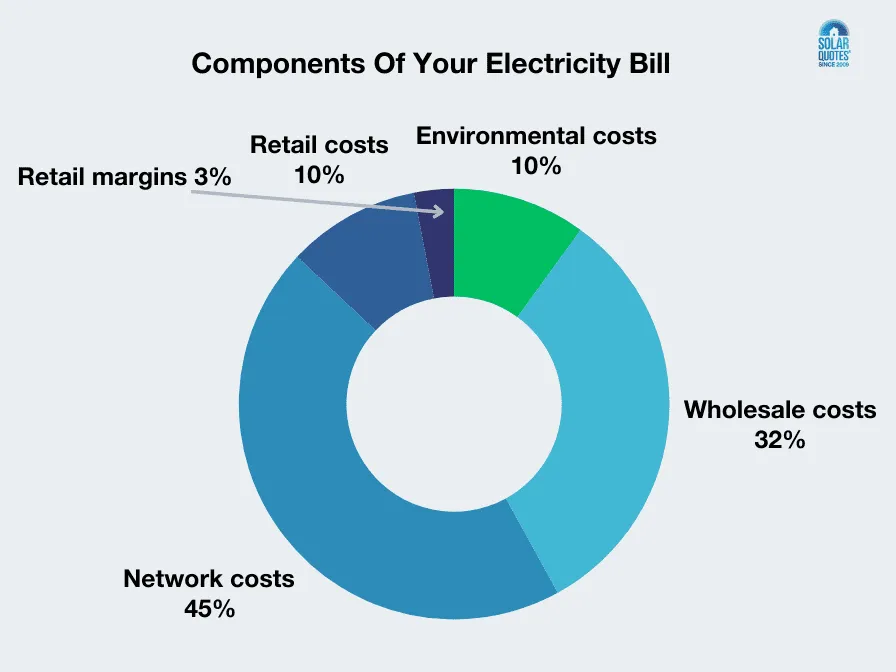
So if Data Centres are using a lot of electricity they are a great share of the paying pie and that means the network component is covered more by them than us
Our job is to pump out electricity to keep the cost down, and to do that more solar! more solar batteries! more heat pumps! etcetc