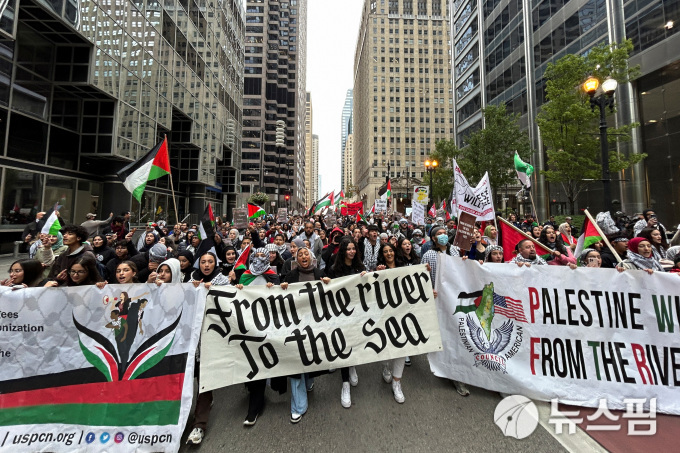
[S. Korea] "The first rally in support of Palestine is held in Korea... The debate over the 'Israeli-Palestinian War' ignites" (translated article in post)
2y 8mon ago in korea@lemmygrad.ml from www.newspim.comVideo from rally: https://yewtu.be/watch?v=XKeAmBwB23Q
Article about it by Workers' Solidarity (in Korean): https://wspaper.org/article/30047(includes many photos)

Gaza Fights For Freedom (2019) | Full Documentary | Directed by Abby Martin
2y 8mon ago in documentaries@lemmygrad.ml from yewtu.beArticles by Sovereignty Research Institute
2y 8mon ago in korea@lemmygrad.mlSituation of Queers in Gaza
2y 8mon ago in palestine@lemmygrad.mlI don't know much about the subject specifically in Gaza or in Palestine in general, aside from this academic paper which is about the use of pinkwashing as a colonizer tactic. Regarding advocacy groups it mentions the group alQaws. Here is an article by alQaws: Queer Liberation & Palestine. Quote from article in which they warn about the weaponization of LGBTQ issues to further colonial agendas:
Israeli settler colonialism, and tactics such as “pinkwashing” weaponize our queer experiences to place us in opposition to our own society and communities. Pinkwashing is a form of colonial violence. It promotes harmful narratives and policies that alienate queer Palestinians from our own communities. Our answer to pinkwashing is to say that liberation is indivisible, and that there will be a place for all of us at the rendezvous of victory. The Israeli criminal government and Zionist LGBTQ movement manipulate and exploit queer Palestinians’ lived realities to advance a colonial agenda. The standards for solidarity and action cannot be set by the colonizer.
Another article from them: No Queer “Co-Resistance” with Colonizers: Confronting Normalization and Pinkwashing
In alliance with anti-colonial coalitions, alQaws developed and popularized the concept of “pinkwashing” to expose how Israel and its defenders use the language of LGBTQ rights to distract from the oppression of Palestinians. Over the years, Palestinian activists came to recognize that pinkwashing is not simply an outward-facing propaganda machine—it is a direct form of colonial violence, one that pushes Palestinians to view ourselves and our communities through the lens of colonial prejudice.
Pinkwashing relies on exploiting progressive rhetoric about “tolerance” and “gay rights,” to conceal the violent nature of the occupation and settler-colonialism in Palestine. Normalization, similarly, draws on liberal ideals of “dialogue” and “partnership.”
5 Way to Support Palestinian Queers
Perpetuating tiresome tropes of presenting Palestinians as inherently oppressive and Israel as a liberal state that protects LGBTQ rights is counter-productive and factually baseless. Israel is a settler-colonial state that offers no rights to Palestinians, queer or otherwise. Our struggle as queer Palestinians is against Israeli colonialism as much as it is against homophobia and patriarchy in Palestine. Israel uses pinkwashing tactics to lie about “saving” LGBTQ Palestinians from their society. We ask that you steer away from these lies that are intentionally used to justify their colonization of Palestine. alQaws and our allies in Palestine will continue to amplify our message as well as provide protection and a political home for LGBTQ Palestinians. Israeli LGBTQ groups do not have a say in the work that should be done to fight patriarchy and homophobia in Palestine, including the incitements led by the Palestinian police.
As I said, I don't know much about it beyond the above, which I have not looked deeply into, so take this information with a grain of salt.
I just heard that the DPRK is PatSoc. Thoughts?
2y 8mon ago in comradeship@lemmygrad.mlI suggest studying some Korean history and reading the works of DPRK's leaders and other DPRK authors directly and over time you can form your own evaluation of what they believe and why they have implemented particular policies at various times. I don't have time to write more on it at the moment but you can find some of Kim Jong Il's views on Marxism, Marxism-Leninism, socialist construction, and Juche here.
The "patsoc" ideas which promote patriotism in the imperial core and reject decolonization are much different from the socialist patriotism which is anti-imperialist and decolonial. DPRK does uphold socialist patriotism, which is regarded as part of its internationalist duty of completing the Korean revolution by focusing the majority of its attention on Korea, to make sure their revolution is successfully carried out, and which is specifically against promoting national chauvinism, and rejects racism.
DPRK's emphasis on looking inward for solving its problems and on self-reliance come from Korea's specific conditions. Specifically, Korea has been a battleground for world powers for much of its existence and historically had strong ideological currents of subservience to larger powers influencing its politics, which posed obstacles for progressive/revolutionary movements in Korea since feudal times and into the modern era. After DPRK was formed, it also had to deal with the issue of different influential strains of thought among socialist countries, including its powerful neighbors, Russia and China, during the Sino-Soviet split. The opening of China and the fall of the Soviet Union led to further inner debates. DPRK's emphasis on focusing on its own conditions is a necessity for it to avoid dogmatically following other states' lines and thus committing errors in its own revolution, not a blanket rejection of foreign ideas.
I am still learning about Songun, but from what I have read so far, it seems to have its roots in the Cuban missile crisis where US aggressions were ramping up, and finally came to the fore as policy during the Arduous March, when the US was trying to use the economic upheavals after the fall of the Soviet Union, with the US attempting to end DPRK by intentionally starving its people to death. It was determined that in order for Korea to complete its revolution and defend socialism, it would be necessary to heavily prioritize defense due to DPRK being under constant mortal threat from imperialism. Edit: Also, with DPRK's more recent nuclear developments, I believe the policy of Byungjin (parallel development of military and economy) has returned to the fore, though I may be wrong about that. I'd appreciate being corrected if someone knows.
Kim Il Sung on socialist patriotism, preventing chauvinism, and rejecting isolationism
In educating the working people in socialist patriotism, care should be taken to prevent the growth of tendencies to national chauvinism and restorationism. One may be apt to head for chauvinism on the plea of building an independent national economy by one’s own efforts and promoting national pride. If we steer in the direction of chauvinism as Regent Taewongun pursued a policy of national isolation, we will come to reject international exchange and advanced science and technology from other countries and, accordingly, hinder the development of our country. Likewise, it is wrong for us to dislike reading foreign books and feel disinclined to learn foreign languages on the grounds of building an independent national economy and establishing Juche in science. It does not always follow that one is infected with revisionism because one reads foreign technical books and that one becomes pro-Japanese or pro-American because one learns Japanese or English. When learning foreign languages we must not lay stress on any one of them but study Russian, Chinese, English, French and other languages. The point is to learn them for the good of the people and for contributing to the rapid development of the socialist motherland, without engaging in flunkeyism. Besides inspiring the working people with national pride, we should educate them better in the spirit of internationalism. Thus, we will fight resolutely against the imperialists and Right and “Left” opportunists, in unity with the peoples of the socialist countries, and in close unity with many other peoples of the world.
quote about preventing dogmatism in solving problems in the revolution without mechanically copying others
From the work "Modern Korea" by Kim Byong Sik
For countries such as Korea, where the working class has conquered power and established a dictatorship of the proletariat, it is vital to the success of the revolution to work out correct theoretical propositions concerning the transitional period: How to understand the significance and nature of the transitional period, how to set the various tasks of the transitional period according to its different stages, and how to analyze inter-relationships between the transitional period and the dictatorship of the proletariat.
Despite the importance of these questions to the revolution, there has been insufficient clarification and various deviations have been committed, with the result that immeasurable damage has been done to the practical struggles for socialist and communist construction. This urgent problem -- the task of solving correctly, theoretically, the question of the transitional period and the dictatorship of the proletariat- was accomplished by Kim Il Sung, in detail, on the basis of the revolutionary principles of Marxism-Leninism.
His ideas and theory were developed in his work, Questions of the Transitional Period from Capitalism to Socialism and the Dictatorship of the Proletariat. In this work, he said:
As with all other scientific and theoretical questions, questions of the transitional period should be solved on the basis of the Juche idea of our Party. We should never try to solve these questions dogmatically by becoming slaves to the classical propositions on this question, nor should we be influenced by subservient ideas and follow others in the solution these questions.
In the interpretation of classical propositions it is essential to understand the historical circumstances and the premise on which the classical works were based. Only on this basis is possible to understand the content of classical propositions and to grasp their revolutionary meaning. If the historical circumstances are ignored, it will lead inevitably to a one sided and dogmatic interpretation or to a revisionist interpretation that seriously distorts the revolutionary content.
Specifically, if a classical proposition is applied mechanically to a changed situation, without considering the historical circumstances and theoretical premises related to the proposition, not only will a fundamental error be committed in the theoretical solution of the question but a decisive error in practice will also result. Thus, to solve the problems of the transitional period and the dictatorship of the proletariat, it is necessary to base ourselves firmly on the revolutionary propositions of Marxism-Leninism and, at the same time, to uphold the Juche idea of applying them creatively to suit the constantly changing and developing actual conditions of the revolution.
I recommend this essay on ProleWiki, The Cleanest Farce: How "Experts" Distort the DPRK, and the page about Juche which has sections about Juche's relationship to dialectical materialism and to Marxism-Leninism specifically. Tl;dr is that ML is seen as a correct revolutionary idea but that it, being very old by now and being formulated in the world's first successful socialist revolution, it lacks certain concrete details about socialist construction in the present day and also (naturally) has a different context than Korea's revolution. Therefore it is regarded as a basically correct idea for revolutionaries to follow, but that following it dogmatically is an insufficient application of it, and all countries will need to forge their own path to suit their own conditions as they are confronted with the task of socialist construction and defending the revolution in the present conditions. Juche takes the dialectical materialist view of the world, and it is just dealing more with how people can have a certain attitude and point of view to successfully carry out revolution.
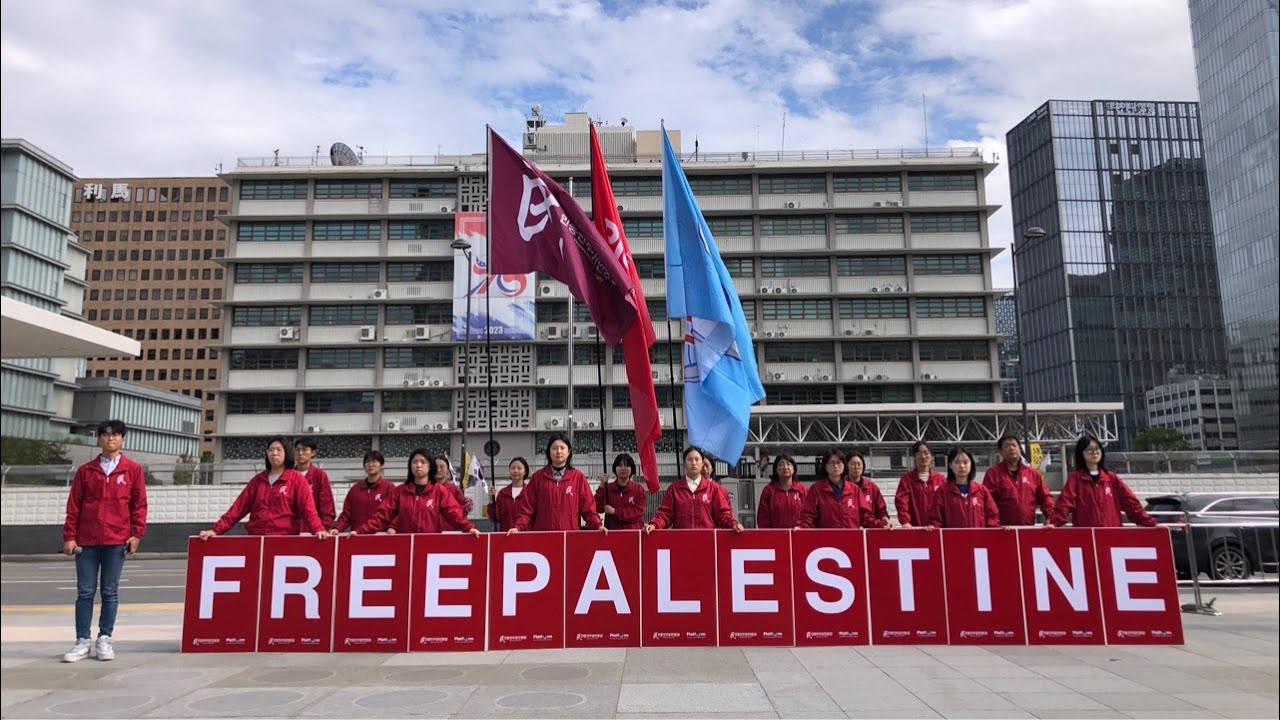
[S. Korea] People's Democracy Party: "We condemn the US imperialist aggression! Free Palestine!" (full statement in post)
2y 8mon ago in korea@lemmygrad.ml from www.youtube.comFrom a Congressional Research Service report:
Israel is the largest cumulative recipient of U.S. foreign assistance since World War II. Successive Administrations, working with Congress, have provided Israel with assistance reflective of robust domestic U.S. support for Israel and its security; shared strategic goals in the Middle East; a mutual avowed commitment to democratic values; and historical ties dating from U.S. support for the creation of Israel in 1948. To date, the United States has provided Israel $158 billion (current, or noninflation-adjusted, dollars) in bilateral assistance and missile defense funding. At present, almost all U.S. bilateral aid to Israel is in the form of military assistance; from 1971 to 2007, Israel also received significant economic assistance.
Almost all current U.S. aid to Israel is military assistance. U.S. military aid has helped transform Israel’s armed forces into one of the most technologically sophisticated militaries in the world (see “Qualitative Military Edge (QME)”). U.S. military aid also has helped Israel build its domestic defense industry, which now ranks as one of the top global arms exporters.
This was not thousands of years ago:
On November 29, 1947, the United Nations voted to partition the British colony of Palestine: 55% for a Jewish state, 44% for an Arab state, and 1% for an international zone. In true colonialist fashion, there was no consultation with the Palestinians before the vote.
Most of the two million residents of Gaza are refugees and their descendants (who also have refugee status), driven from other parts of Palestine in 1948. Altogether, more than 750,000 Palestinians were expelled in 1948-49 to make way for the creation of the Israeli state. Another 300,000 were driven out after the Six Day War in 1967. Today, there are seven million registered Palestinians refugees, many still living in 59 refugee camps in Jordan, Lebanon, Syria, Egypt, the West Bank and Gaza. None have ever been allowed to return to their stolen homes, farms and shops, in blatant violation of their rights.
Plan Dalet escalated the level of violence directed against the Palestinian civilian population to an extreme. A typical operation carried out by Zionist military units would involve planting explosives around Palestinian houses in the middle of the night, drenching them with gasoline and then opening fire.
The US's extensive backing of Israel is described in this article:
The United States financially supported Israel from as early as the 1950s. The 1967 Arab-Israeli war was a watershed event in the region’s history when Israel captured massive amounts of Palestinian territory and expanded into Syria.
More than 35,000 Arabs were killed, many of them burned to death by Pentagon-supplied napalm bombs. Ninety thousand Syrians and Palestinians were driven out of the Golan region of Syria. This war revealed to U.S. leaders that Israel could be a highly-effective weapon against Arab and Palestinian liberation struggles.
Israel receives $3.8 billion in military aid from the United States every year — a sum that is also a subsidy for the U.S. weapons industry, which Israel is required to purchase the weapons from. While more and more countries around the world join the consensus that Israel is an apartheid state, U.S. diplomatic support remains a vital lifeline. Put simply, Israel could not and would not exist without unilateral U.S. economic, political and military support.
I suggest watching this documentary to understand more about Gaza in particular.
Pretty disgusting of you to make light of the numerous atrocities committed and backed by the US throughout Asia
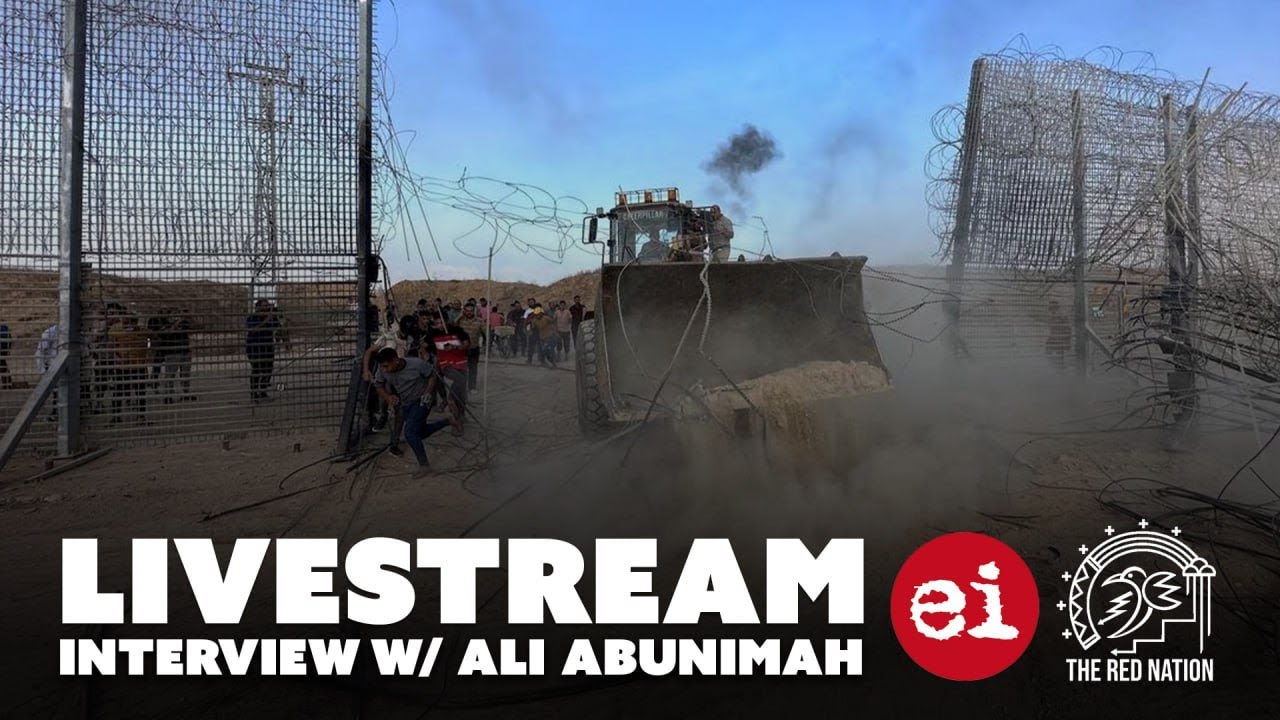
"A nightmare and a dream": Palestinians rise up - discussion between Ali Abunimah, founder of The Electronic Intifada, and Nick Estes, co-host of The Red Nation podcast
2y 8mon ago in anti_colonialism@lemmygrad.ml from www.yewtu.be
Anti-imperialists in S. Korea: "US troops must leave the Korean Peninsula immediately" "The United States must stop atrocities that turn other countries into battlefields" (article translation)
2y 8mon ago in korea@lemmygrad.ml from minzokilbo.comWe need your feedback on a new library feature
2y 8mon ago in prolewiki@lemmygrad.ml- It seems fine to me as a concept, as it doesn't strike me as much different than any book which has multiple introductions as different publishers pick it up over time. There could also be a page somewhere, "About ProleWiki introductions" which is linked at the start of each of these intros. The page could explain the overall method behind how and why these intros are written and when the implementation of this feature began, for transparency.
- Possibly.
- Unsure on this. I think more detailed opinions and interpretations might be better placed in an essay, perhaps books in the library can have a section at the beginning after the contextual introduction, or on a related page, in which editors may add links to opinion/interpretation essays on the work, perhaps limited to essays which were specifically written and submitted as introductions for the work (rather than just any essay about the work), or with section headings separating introduction essays from other types of essays on the work. However, as I said, I am unsure.
- Somewhat concerned, but as it hasn't been implemented yet, I want to see what happens in practice with a few works.
- Nothing comes to mind right away but I will keep this question in mind next time I access a work on the library.
- "Introduction to the ProleWiki edition", possible link to "about ProleWiki intros" page suggested above, the intro itself, ending with the date it was written and names of its author(s). Footnotes could start with "(PW)" or something similar.
- (1) In general I am happy to see things like this being tried out, whatever the results may be. (2) This makes me curious as to whether things like comprehension questions (such as for self study or study groups) could also be appended to some works in a similar way, if there is interest in it and if the introductions concept seems to be working smoothly? As well as other forms of extra material that might appear in the end of a book, I am curious whether there is interest in that type of thing or other extra material (beyond what can already be accomplished as essays which are not specifically linked or included in a work).
[Article] Imagining South Korea without America - A new book questions whether the ROK-US alliance has truly served Korea and Koreans
2y 8mon ago in korea@lemmygrad.ml from english.hani.co.krUS finalizes guardrails for chipmakers operating in China, posing dilemma for South Korean firms
2y 8mon ago in worldnews@lemmygrad.ml from english.hani.co.krAs far as I understand, it's subsidies in this case. US will subsidize elements of the Korean corporation's production as long as they build factories in the US but the benefits will be taken away if they have over the specified amount of production going on in China. And the amount they specify for that basically amounts to not allowing them to make any more factories in China and not letting their existing ones be highly productive.
South Korea: Missing April 3rd victim identified for the first time in 74 years in Golryeonggol, Daejeon
2y 8mon ago in korea@lemmygrad.ml from www.tongilnews.com[Article] (CW: Descriptions of violence and death) New testimony sheds light on untold massacre of villagers by S. Koreans during Vietnam War
2y 8mon ago in korea@lemmygrad.ml from english.hani.co.krN. Korea welcomed at athletes' village in Hangzhou
2y 8mon ago in korea@lemmygrad.ml from www.koreatimes.co.krWhat is the percentage of homelessness in Socialist countries compared to capitalists countries?
2y 8mon ago in asklemmygrad@lemmygrad.mlI don't unfortunately
United Nations Population Fund's summary of DPRK's 2008 census: "Housing is provided by the government free of charge. It is the responsibility of the state to provide housing to everyone. Hence, there is no homeless population." (p. 4)
Unfortunately, I haven't yet double-checked that particular document's authorship (i.e., is it the UNFPA summary as the uploader's description states? Or is it the summary that DPRK's statistics bureau submitted to UNFPA? Or something else?), so take it with a grain of salt and try to verify it if you're going to be using that quote for something.
More info (although not exactly what you asked for, but maybe some will interest you)
DPRK Socio-Economic, Demographic and Health Survey, 2014: This one is co-written by the DPRK's Central Bureau of Statistics and the United Nations Population Fund. There is no specific mention of homelessness in the report but lots of information about housing.
Article: North Korean defector says no homelessness in Pyongyang: "Kim Ryon-hui, the North Korean defector who had said she was tricked into traveling to South Korea by Seoul’s spies in China, said life is better in the North. [...] Kim said South Koreans know very little about life in North Korea, and that upon her arrival in the South, she was surprised by the sight of numerous homeless people in the Seoul subways. Kim said she had never seen homelessness in Pyongyang, because if someone is lost they are taken to their home by a helpful stranger. 'I was surprised that [homeless South Koreans] don't look for their parents or siblings,' she said, stating she had lived in a socialist country for 42 years." (Oddly, this news outlet appears to have been bought at some point by a company connected with the anti-communist Moon organization) (More about Kim Ryon-hui's attempts to return to DPRK and being held in the south against her will)