
Why are all of the Bananas and Oranges in FL from California?
9h 47m ago in nostupidquestionsAdding to the other comments, even when certain fruits can indeed be grown in places besides California, there's also the matter of infrastructure. Not specific to oranges, Pacific Fruit Express (PFE) supplied refrigerated train cars for long-haul distribution of fruits from California's Central Valley out to the East Coast. Because this was the early 20th Century before mechanical refrigeration was widely available, cooling had to be done using the same approach for centuries: ice.
In this regard, California was blessed with the Sierra Nevada mountain range, where water could be frozen into ice and then transported by rail on the now-Union Pacific transcontinental railroad to Sacramento and then down to the entire Central Valley for keeping food from spoiling during the long journey out east. The fact that these fruit-laden railcars had to go through the mountain pass again meant they could be topped up with more ice, and when the empty train car returned from the East Coast, it could carry ice back down to the Central Valley again. A virtuous cycle.
Basically, fruits not only need to be growable, but also the transportation infrastructure must exist. Sure, Florida also had railroads in the early 1900s but it was not really well connected to the rest of the Eastern Seaboard. As a side note, this is a contributing factor to the Confederacy's loss in the American Civil War, since different railroad gauges meant they had more difficulty mobilizing by rail, specifically for materiel. Whereas the industrialized North already used standard gauge everywhere for their mainline trains. So even if Florida did have standard gauge going into the 1900s, the different rail companies involved would not necessarily have had good enough relationships to easily schedule the necessary cargo trains to do a full run from Florida to the population centers up north. These are all frictions that never plagued the now-Union Pacific, which could run basically effortlessly from California to Chicago and eastward beyond. And of course, Florida is not known to have ice-making weather.
And now with an advantage of over a century, with the California fruit industry already built up, what would be the point to build up the same infrastructure but in Florida? It would be expensive and there's no need for it, not unless California is about to secede from the Union.

New line and circuit for dishwasher. First time connecting to the load center
12h 44m ago in Dullsters@dullsters.net from sh.itjust.worksTIL Leviton makes breaker panels. I always thought they just made switches, outlets, and home automation stuff.

IBM Team Designs Intent-Based Cryptographic API For Algorithm Transition
1d 23h ago in crypto@infosec.pub from quantumzeitgeist.comThe paper PDF by the IBM researchers: https://arxiv.org/pdf/2606.13445v1
From just the abstract, I'm a bit alarmed that the researchers believe that "cryptographic agility" is reducible to a software engineering problem, rather than a complex function of regulatory (eg PCI-DSS), governmental (eg FIPS), and availability (eg hardware acceleration/support and robust implementations) considerations.
But even before all of those stakeholders get involved, is cryptographic agility still an operational objective? Sure, there's the matter of transitioning to PQ crypto, for scenarios where HNDL is a serious concern over the time horizon of whatever's at stake. But is that perceived as a one-time event, or is the idea that all future upgrades should be abstracted?
I find the latter a bit difficult to credibly believe, as the last major attempt at cryptographic agility was so thoroughly bungled that JWT alg:none has a website to highlight the problem.
Agility is only useful if it's actually moving forward: if instead it's an excuse to stand in place, then it's worse than nothing. Best I can tell, this paper seems to deal with abstraction of specific implementations of cryptographic libraries. So this would be akin to not binding directly to OpenSSL vs BearSSL, but having the ability to swap one out for the other.
In that more narrow sense, a lateral move like that is probably fine to abstract. But I can't see how this would fair well if used to shoehorn newer cryptography into applications that either are firmly dependent or are brittle in other, in-abstractable ways.

US supreme court rejects challenge to New York law allowing lawsuits against gun industry
2d 7h ago in law from www.theguardian.comFor folks that wish to see the full judicial history of this case, here is the archive hosted by CourtListener.
In chronological order, the Second Circuit gives us the background so we can examine the history in brief:
- October 2005: the US Congress passes a law that absolves liability for gun/ammo manufacturers and distributors, when relating to firearms misuse by others
- July 2021: the New York State Assembly approves and the Governor signs into law Section 898-b, which imposes civil liability from the sale/marketing of firearms
- December 2021: the National Shooting Sports Foundation and some gun manufacturers (collectively "NSSF") file suit against NY Attorney General in the Northern District for New York (NDNY) federal court, with two counts relating to federal preemption, one on interstate commerce, and one related to vagueness
- May 2022: NDNY issues its judgement, finding that liability from sale/marketing of firearms is distinct from Congress's absolved liability for firearms misuse by others, thus presenting no conflict. Interstate commerce is no issue since 898-b applies to both in-state and out-of-state gun manufacturers. Vagueness is premature because the law hasn't been applied yet.
- June 2022: NSSF files it appeal to the Second Circuit. Their brief rehashes the same claims made earlier, such as how 898-b will affect out-of-state marketing (thus being interstate commerce), that Congress must have also intended any lawsuit to prove a knowing/proximate-cause standard (which a marketing lawsuit would not require), and then finally a public policy argument that state-by-state gun marketing laws would cause chaos
- July 2025: the Second Circuit issues its opinion, affirming the NDNY judgement. The Circuit rejected the extraterritorial argument since 898-b requires a NY state nexus for all that it would punish. They also rejected Congressional intent that isn't in the written statute. And by Congress's own terms, it is allowable to criminalize a predicate offense by a gun manufacturer, which is exactly what 898-b does.
- February 2026: NSSF petitions the US Supreme Court (SCOTUS) to hear their appeal, with two main arguments, 1) the Second Circuit's opinion is different than the other Circuit's, which would result in different law for different parts of the country, and 2) rehashing their public policy argument again, that states can now end-run the federal law on gun liability
- May 2026: SCOTUS begins distributing the case work and examining the petition
- 15 June 2026: SCOTUS declines to hear the appeal, ending any further appeal and leaving the Second Circuit's opinion in place. Other Circuits are not affected.
Essentially, what NDNY and the Second Circuit held is that the federal law was specifically about suing gun manufacturers for gun violence caused by some third party. The most charitable read is that Congress did not want the courts to be clogged up by lawyers coming up with way-too-creative theories about how a gun seller or manufacturer could have liability, years or decades after selling any particular gun. But the "predicate exemption" in that federal law allows states to still put liability on gun manufacturers for things that occur prior to a shooting.
For example, a gun manufacturer that is negligent in requiring their New York State retailers to do background checks, they might be liable under 898-b. This is not a creative theory under law -- negligence is punishable -- and it is a single, predictable event that can be adjudicated. Whereas Congress wanted to forbid, for example, liability for anything that's even in-range of a firearm; this is far too specious and hence is disallowed.
Essentially, NY narrowly tailored their law and it held.
Can a small android phone work as a router ?
2d 15h ago in nostupidquestionsTechnically yes. In fact, that's exactly what smartphones do when they operate as a wifi hotspot: packets come in from the mobile provider and are IP routed to the Wifi network, and vice versa. Whether this happens using Legacy IPv4 and NAT, or with prefix-delegation on IPv6, it's still routing.

[USA] Walgreens: 5x free 4x6 prints. Use code FIVEJUNE . Exp 16 June EOD
3d 10h ago in freebies@sh.itjust.works from photo.walgreens.comI sorted the change
3d 19h ago in dull_mens_clubTIL there are 20 and 50 Eurocent pieces.
In California, it is a rarity to see the 50 cent USD coin and while still legal tender, it is definitely not given out as change at stores and not accepted by vending machines.
I actually think $2 USD banknotes are more commonly seen than the 50 cent USD coin, although those aren't accepted by vending machines either.
This $800 Flex-Fuel Motorcycle Might Be The Most Sensible Bike On Earth. Maybe
4d 11h ago in micromobility from www.rideapart.comIn many ways, it's the motorbike equivalent of the Buffalo Bike, previously discussed in this community: https://sh.itjust.works/comment/15748824
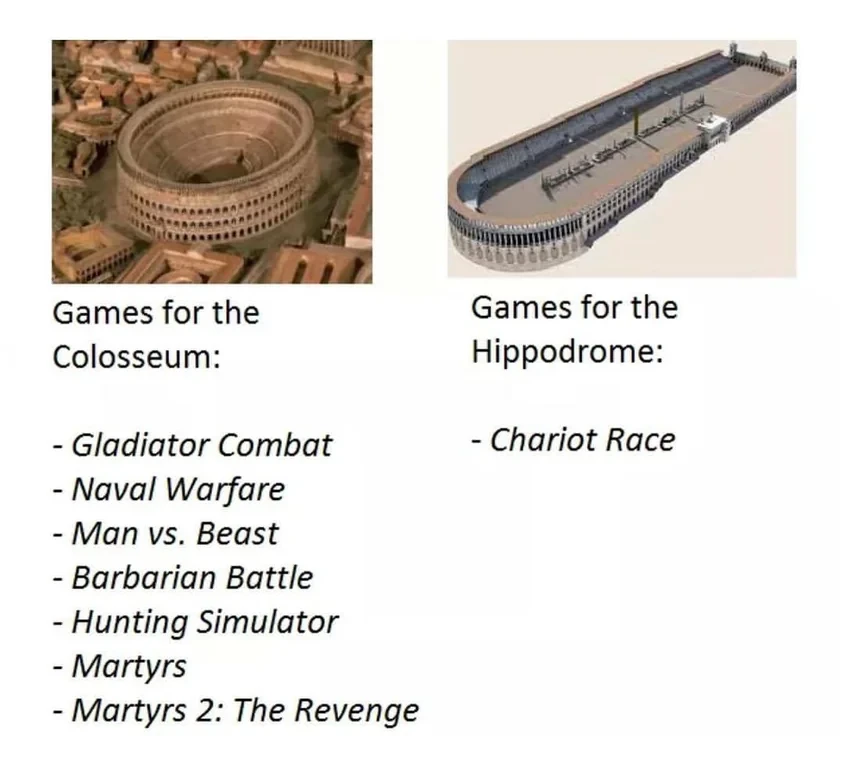
The Flavian Amphitheatre is clearly the superior console
4d 22h ago in roughromanmemes@piefed.social from media.piefed.socialIt's also perfect for no-rules Nascar: https://what-if.xkcd.com/116/
Do residential property taxes go down if the housing market declines?
5d 5h ago in nostupidquestionsLet's also not forget inheritance tax, which directly addresses the problem of hoarding wealth and perpetuating inequities across generations. If supposedly "self-made" people "earned" their billions, then their heirs should have no problems earning their own as well.
In California, property tax is adjusted annually regardless of which way it goes. But if it goes up, it is capped at 2% per year, due to Prop 13. If the assessed value drops, then the reduction in property tax is not limited.
As public policy, this has been devastating for local funding, being the primary means for funding local school districts in this state. When the education prospects of children are subjected to the whims of the wider economy and/or how hot (or not) the local property market is, this is a recipe for inequity: well-off areas are willing to tax themselves extra (beyond the Prop 13 2% cap) and get good schools for it. But poor areas cannot afford even the existing tax, because property tax is regressive and consumes a larger proportion of poorer household budgets. Meanwhile, the state abdicates its role in funding education, because they believe the locals would vote for more taxes for education, even though it's plainly obviously a Zip code lottery.
But I digress.

Rooting Home Assistant through MeshCore: XSS attacks with a LoRa node name | Sasha Romijn
14d 12h ago in homeassistant from mxsasha.eu
Rooting Home Assistant through MeshCore: XSS attacks with a LoRa node name | Sasha Romijn
14d 12h ago in Meshcore@feddit.org from mxsasha.eu[USA] Walgreens: six free 5x7 photo cards. Use code MAILSIX . Exp 21 May EOD
28d 38m ago in freebies@sh.itjust.works from photo.walgreens.com[USA] CVS: 3x free 5x7 prints. Use code MAY3DAY . Exp 19 May EOD
1mon 1d ago in freebies@sh.itjust.works from www.cvs.com
How MeshCore Scales Where Other LoRa Meshes Hit Walls | Magnus919
1mon 6d ago in Meshcore@feddit.org from magnus919.com[USA] Walgreens: free 8x10 print. Use code MVPMOM . Exp 10 May EOD
1mon 10d ago in freebies@sh.itjust.works from photo.walgreens.comHow prevalent are cash transactions in the USA?
1mon 12d ago in nostupidquestions
MeshCore's problem with security | Alainx277's Blog
1mon 18d ago in Meshcore@feddit.org from alainx277.com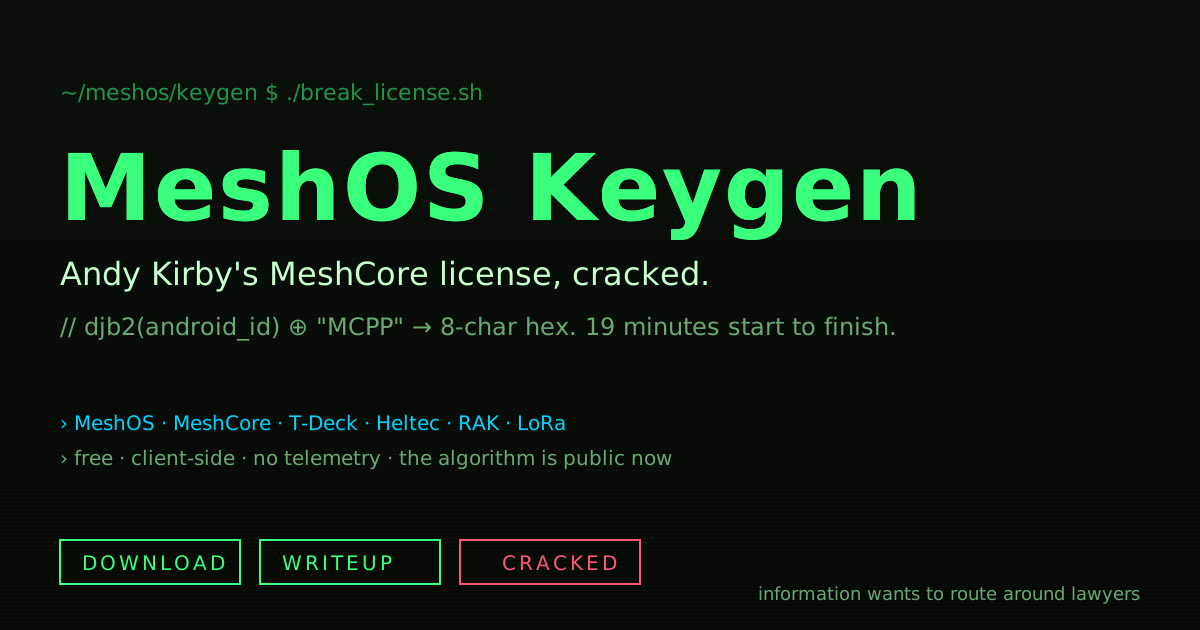
MeshOS Keygen - License Key Generator for MeshCore (T-Deck / Android)
1mon 20d ago in Meshcore@feddit.org from meshoskey.com