

Developing human embryos imaged at highest-ever resolution
2y 11mon ago in microscopy@mander.xyz from www.nature.com
More states legalize sales of unpasteurized milk, despite public health warnings
2y 11mon ago in cooking@mander.xyz from medicalxpress.com
Takeda yanks FDA filing for dengue vaccine, citing data disagreement with regulator
2y 11mon ago in medicine@mander.xyz from www.fiercepharma.com
[DISC] Please Go Home, Akutsu-san! Ch. 145
2y 11mon ago in manga@lemmy.ml from mangadex.orgPlease, please let Ooyama's accidental confession mean something. Imo, this series has really pushed the "do they like me" bit to the breaking point. If Akutsu goes back to questioning it, then it's clear this series is never going to see real relationship progress.
ULA shipping Vulcan upper stage back to factory for more work
2y 11mon ago in space@beehaw.org from arstechnica.comSpain delays rocket launch until Sept over risk of starting a wildfire
2y 11mon ago in space@beehaw.org from phys.org
Digitally designed protein works like an antifreeze for biological material
2y 11mon ago in biotech@mander.xyz from phys.org
Fondant: Where baking and thermodynamics mix
2y 11mon ago in cooking@mander.xyz from phys.orgWhy Raeliana Ended Up at the Duke’s Mansion - Episode 12 Discussion
2y 11mon ago in Anime@kbin.socialAgree that the ending felt a bit weak. I think that picking up the pace in the show a bit more and getting further in the story would have helped things. At the moment, Raeliana is still a character without much agency, and it would be great to see a bit of her future character growth.
So, it has been a while since I read the manhwa (I haven't read the original webnovel), but I am overall pleased with how the adaptation has gone so far. You could definitely tell that there were very limited budgets. There are so many instances of slideshow animations or just still images, but they seemed to invest heavily in making beautiful stills and backgrounds.
My major complaint about the show is that, in general, it has gone very slowly. I expected them to be further along in the story after 12 episodes, but the pacing has been plodding at best. If my memory serves, I think they adapted 3 of the 7 volumes of the manhwa. I understand that a lot of shows tend to go too quickly, but this show just seems to drag out every conversation like it is padding for time (maybe to help stretch the animation budget too).
Overall happy with the show so far and hope that if it gets a second season it gets a bit more resources thrown its way.
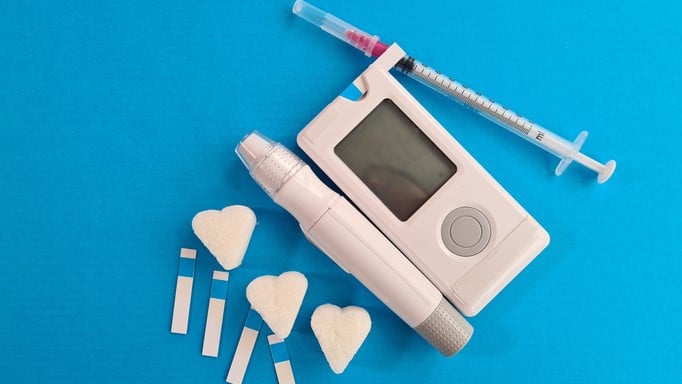
Vertex’s diabetes cell therapy spurs insulin production in a half dozen patients
2y 11mon ago in medicine@mander.xyz from www.fiercebiotech.comThat is true. Vertex claims that some of the follow-up therapies to this do not require immunosuppressants, so time will tell.
From a strategic perspective, I wonder if they will proceed with Phase 3 or not. I have worked on several programs in the past where we pushed through to Phase 2 to get a proof of concept in humans before scrapping the program because we have a better version of the molecule (using the same mechanism of action) getting ready right behind it. This therapy from Vertex may have proven the concept to allow a better version to come next.

TIL Chixculub crater was found 70 years prior to being ID'd as the event that killed the dinosaurs
2y 11mon ago in science@mander.xyz from en.wikipedia.org
Fractal Wood Burning (DO NOT try this at home!)
2y 11mon ago in natural_process_art@mander.xyz from mander.xyzI love Lichtenberg Figures as much as the next nerd, but knowing even a little bit about how they are made should make all the alarm bells in your head go off that it shouldn't be done at home. If you want a safe way to play around with electricity, get a Van de Graaff generator.
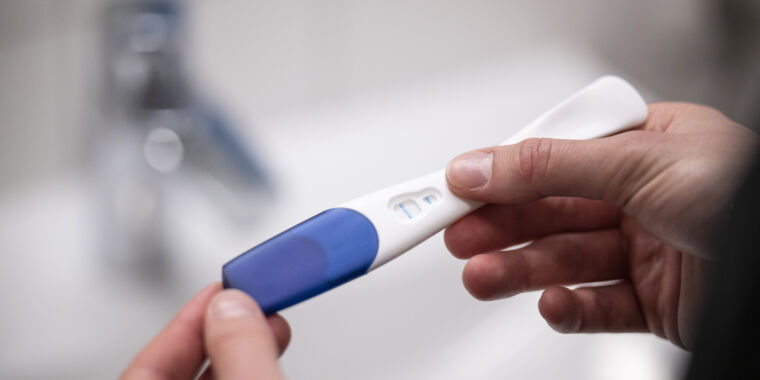
In post-Roe US, clinical trials may be too risky for people who can get pregnant
2y 11mon ago in medicine@mander.xyz from arstechnica.com
Upcoming NANOGrav announcement
2y 11mon ago in science@lemmy.ml from www.phys.ufl.eduThis is neither here nor there, but I just want to compliment whoever did their favicon. I didn't realize favicons could be animated like that, I am surprised I don't see it more often.

FDA Approves First Gene Therapy for Treatment of Certain Patients with Duchenne Muscular Dystrophy
2y 11mon ago in science@mander.xyz from www.fda.govI commented this in a different thread on this news story, but this approval in an interesting one in that it has been approved using the accelerated approval pathway because there was an unmet clinical need. However, if you look at the clinical landscape, there are other options for treatment (also from Sarepta I should mention). Additionally, the interim clinical data showed protein expression which is what the FDA cited in their approval, however that interim data did not show significant positive clinical benefit. From PBS:
FDA scientists detailed a long list of concerns with the company’s research, particularly a mid-stage study that the company submitted for FDA review. Overall, it failed to show that boys who received the therapy performed significantly better on measures like standing, walking and climbing than those who got a dummy treatment
Accelerated approval pathways make sense in many cases they are used, however, the agency should beware allowing accelerated approval being abused by drugmakers to get a drug to market quickly and then slow-walk the post-approval obligations (which are usually very expensive phase 3 studies). Being too liberal with accelerated approvals incentivizes questionably efficacious therapies that are simply used as a profit tool before the data shows the full extent of their clinical impact.
I recently posted an opinion piece that talks about this in some more detail and provided some additional thoughts in that thread. I am not a specialist when it comes to regulatory practices or strategy, but simply a scientist in the field that is concerned about potential abuse of a regulatory mechanism that has the potential to cause harm to patients.
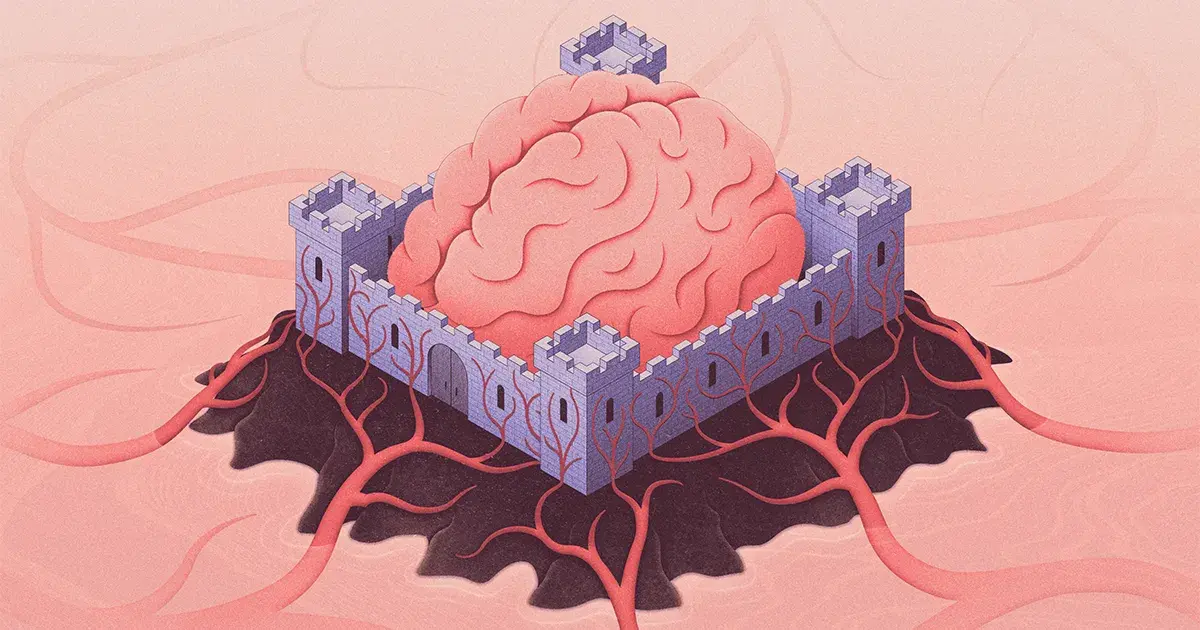
How the Brain Protects Itself From Blood-Borne Threats | Quanta Magazine
2y 11mon ago in medicine@mander.xyz from www.quantamagazine.orgGreat article summarizing the BBB. The brain is one of the highest priority targets for biologics therapeutics (viral & non-viral gene therapies, antibodies, peptides, etc.) and one of the most difficult to access via traditional routes of administration (IV, subcutaneous). I have worked on programs in the past that tried to access the brain via other administration methods (intrathecal, intraparenchymal), but both of these are quite invasive and lead to adverse events purely from the procedure. Engineering ways to cross the BBB would open up a huge number of potential therapeutic options for neurological disorders.
One of the other high priority targets that is difficult to access is the eye/retina. It has a similar set of biological barriers that prevent access to sensitive areas that are medically desired. If you want more reading on the eye, see this paper.

Scientists discover spiral-shaped signals that organize brain activity: Discovery could advance both computing and understanding of the brain
2y 11mon ago in medicine@mander.xyz from www.sciencedaily.comI think that fMRI is just beginning to realize its potential. It is such a powerful technique to image the brain, that as we improve the technique and can see more, we will learn more. I like to make the analogy that modern imaging techniques (MRI, microscopy, PET, etc.) have done at least as much to expand human knowledge as the more widely known (within the general public) telescopes (Hubble, JWST, etc.).
One thing that I like about this approach is that it is looking at the brain as a complex system rather than trying to ID and characterize individual neurons. From the article:
Neuroscience has traditionally focused on interactions between neurons to understand brain function. There is a growing area of science looking at larger processes within the brain to help us understand its mysteries.
This reminds me of my statistical mechanics course when I was in grad school. You can study individual particles all you want, but when you get a large number of them, things change. One oxygen molecule behaves differently than a room full of air just like a single neuron behaves differently than a head filled with a brain. The path of neuroscience is following a similar trajectory physics did in that it could make sense of things at the individual scale, but working with large numbers of interactions is harder and requires more complex experiments/theories/models to deal with.
[Opinion Piece] New Alzheimer’s drug is a problem for FDA’s pass-fail approach
2y 11mon ago in medicine@mander.xyz from www.washingtonpost.comIn my professional life, I have worked on a number of clinical phase therapeutics and authored sections of regulatory filings submitted to agencies like the FDA and EMA. Several of those assets were classified as orphan drugs and were granted accelerated approval. I think that the accelerated approval process fulfills a role that is needed in cases where there is an unmet medical need. Additionally, some indications lend themselves to proven proxy measures for efficacy that give a high level of confidence in clinical use. However, the accelerated approval process as it is currently used is prone to abuse in that the FDA is not able or willing (not sure which) to enforce post-approval actions on drugmakers in a timely fashion.
The author's example of Makena shows that over a decade can pass without showing medical efficacy in follow-up trials before marketing authorization is pulled. The author doesn't go into detail, merely linked to it, but the conditional approval granted by the EMA is much more fit for purpose. Under that process, the conditional approval is just granted for one year and must be renewed each year. I have not worked on this renewal process personally, but from experience interacting with the agencies before, they would be looking for material progress towards meeting any stated post-approval obligations. This process gives the EMA an annual chance to pull a product if there is ambiguous or no demonstrated clinical effect or if the adverse events are more severe or common than anticipated.
As an aside, I found it interesting that the impending Leqembi (lecanemab) accelerated approval is what inspired this article. Leqembi's predecessor, Aduhelm (aducanumab), was granted accelerated approval, but was so poorly received by the market/hcp's/insurance companies, that it might as well have not been approved at all.