Dog plow in Belgium, WW1, 1916
1mon 6d ago by piefed.social/u/PugJesus in historyphotos@piefed.social from media.piefed.social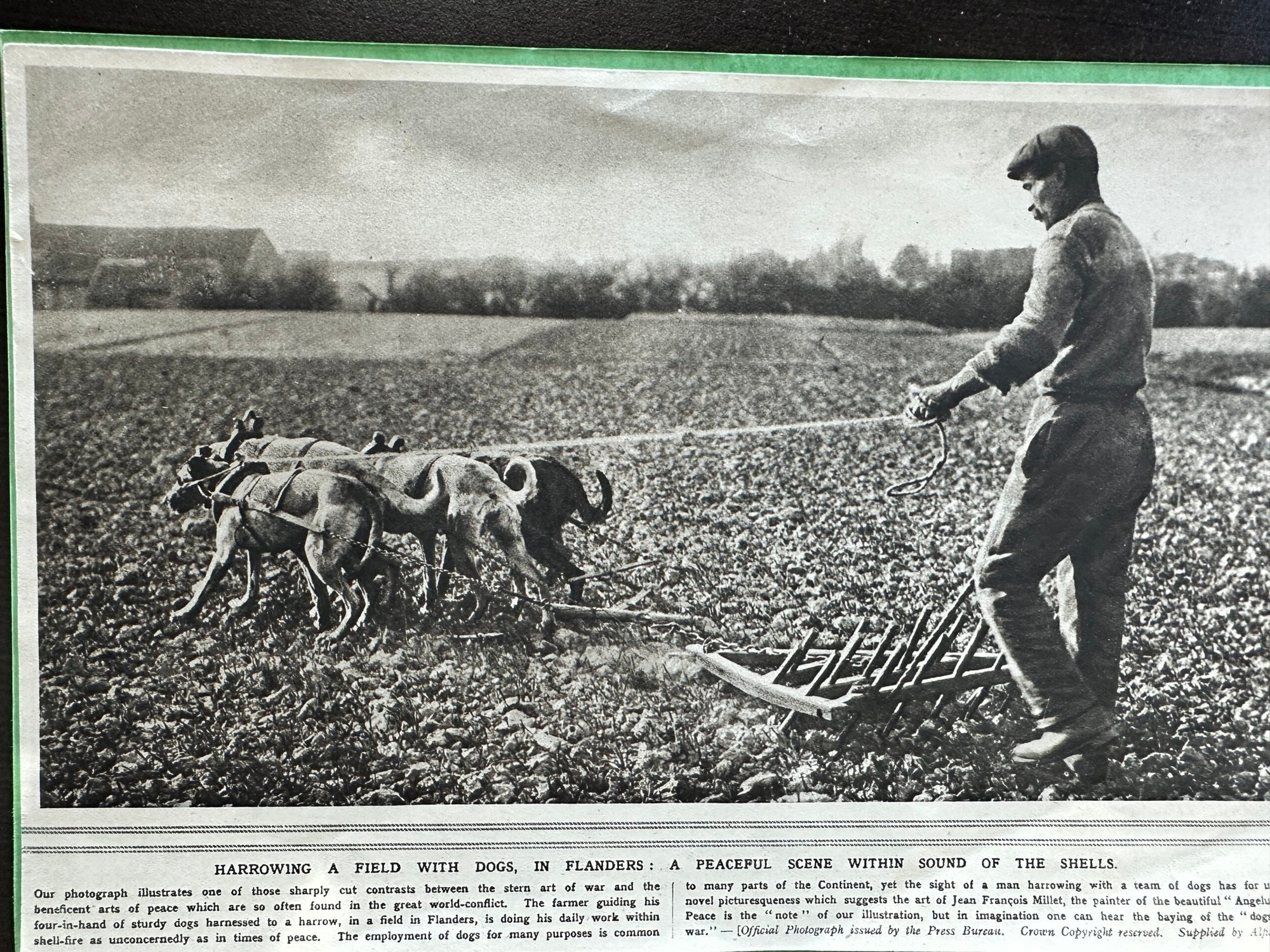
forgive my ignorance, but why? was belgium (or this particular region or this person) a cattle-poor nation at that time? I understand dog sleds (well wolf like, but sure) in tundra, because there aren't any cattle like animals, or horses. maybe yak in some places, but belgium is geographically flat euro land (so a bit cold, but definitely has cattle). Like my problem is not specifically why no cattle, but why dogs? because dogs are fairly weak for plowing, and human plowing is very much a thing. It is definitely labor intensive, but human would be faster.
I think animal weight is an issue with dog sleds to but not sure.
sorry i did not quite get your point.
just that if other animals were available im not sure if they would work out as they might go through ice or snow. So the sleds can only be so heavy and same with the animals and its all relative to how much surface area is in contact with the ground. Like they could likely breed goats to survive the conditions but they likely would not work as well.
size of animal which is feasable in a environment is determined by largely 3 things (besides general genetic limits) - climate, food availablilty, and any predators. within tundras it is very beneficial to be big because your surface area to mass ratio would be less (you lose heat through your surface, and the total heat you produce is roughly proportional to your mass). So most tundra animals grow big.
my guess with dogs being prefered is that 1) they are available, 2) humans have history of collab, 3) they are also predators. last is important, as 1 of the reasons to go out is to catch some prey, and dogs are good predators. goat might fit other 2, but does not fit 3 (their pray is usually very sparse, and almost always 'vegitative'). In areas where there is hardly any other pray (like himalyas), dogs are not raise because their hunting skilss are useless. Yaks (fancy bulls) are raised because they can carry load, and also you can use their "side products" (hair in summer, and milk more generally)
you know I was thinking of mentioning the hairy cows they appear to use in mongolia.
During WW1, many areas of Europe had their horses purchased or just outright seized for the 'war effort'. Horses were a major component of military logistics at the time, and WW1 would see literal millions of horses die in the muddy fields along with unlucky men. Artillery doesn't discriminate, unfortunately.
Belgium, in particular, was in the thick of the fighting, so both the Belgian (and allied Entente) armies, and the occupying German forces, both were grabbing all the horses they could. Farmers, naturally, were some of the hardest hit by these seizures. Not only that, but most of the fit men would have been conscripted for the war as well, and many of the young, healthy women would have been serving in various war industries, leading to further labor shortages.
Belgium has a tradition of working dogs that are bred for hard labor - though not usually for farming! - so the farmer here is 'making do' with what he has!
i guessed horses wer not available because of the great war, and hence I went to straight human plowing, but yeah, i guess most able men were also conscripted
the paper even mentions the sound of shells.
sorry, completely went past my mind. I read a peaceful scene and just stopped reading for some reason
I accept your apology but I don't think was needed. I miss waaaaayyyyy more obvious stuff than that.