Smashphone ! - Sources de motivation pour briser l’emprise
1mon 1d ago by lemmy.world/u/AxZxP in francedigeste@jlai.lu from lundi.am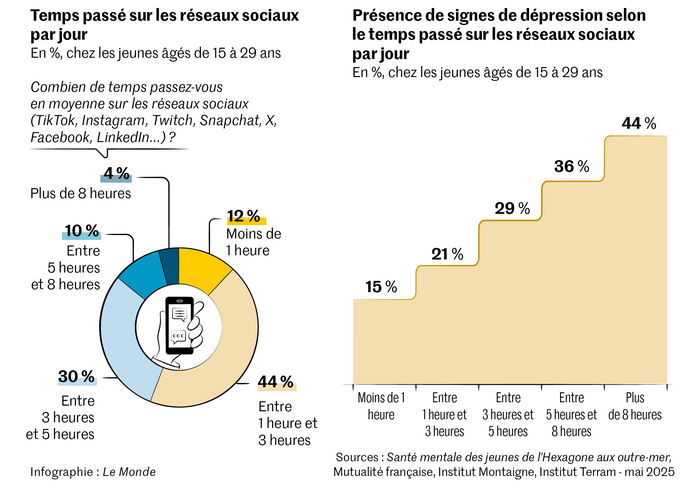
Thank you very much! I'm not the most efficient in French, sorry, but with the article translated to some of the languages I know, I found some of the information quite awesome, including the following:
# Impoverishment of life and malaise
In France, spending 2.5 hours a day on a smartphone from age 10 to 80 would amount to dedicating more than seven years of one's life to it. The majority of this time is spent waiting for something new (a video, a message, some kind of notification) or an update, the satisfaction of which provides a fleeting and unchanging pleasure. This homogenization of sensations is synonymous with the impoverishment of lives and explains why we retain no memory of the hours spent on our smartphones. It is therefore necessary to challenge the arguments that equate screen time with the rest of our time.
When we stare at a screen, our senses are only ever engaged in the same way: we are only ever touching and looking at a glass surface, and we only ever hear the same frequency of sounds. This is therefore a time deprived of interactions with other living beings, with reality, whose propensity to "resist" obviously cannot provide the same short-term pleasure.
Faced with this sometimes downright unbearable reality (heat waves, polluted air, noisy environments, injustices on every street corner, ugly metropolises, and public spaces monitored in every nook and cranny), the virtual world quite logically serves as a refuge: one can experience emotions of various kinds there, but always through other people, without taking any risks. Above all, one can live vicariously, identifying with characters for a few hours, thus injecting a little excitement into our otherwise dull lives.
By turning to their smartphone to alleviate their unease (partly caused by the device itself), users become trapped in a self-perpetuating cycle. This explains why some people spend absurd amounts of time on their smartphones: 10 hours a day on weekends or during holidays (times supposedly free from work and school). Identifying with and comparing themselves to strangers is also very likely to lead to unhappiness in the long run, as users quickly realize the artificial nature of the experience and emerge increasingly frustrated. But by spending all this time on their smartphone, they haven't learned to build satisfaction or happiness on anything else. Already isolated due to the atomizing and individualizing nature of society, the device may mask their loneliness (by temporarily soothing it or making them forget it), but in reality, it only reinforces it.
The smartphone then postpones the difficult quest to find meaning in life, further exacerbating their unease. By prioritizing the fastest route as promised by Google Maps (rather than risking getting lost and enjoying the unexpected), by promising to identify the exact plant with a percentage of error as promised by Plantnet (rather than taking the intellectual path that leads to this result), the smartphone contributes to locking the user into a quest for efficiency devoid of all poetry, of all flow , obsessed with achieving completely harmless objectives.
Source [translated: Google; web-archive]