Why are we OK with doctors and nurses working double or triple shifts?
23d 4h ago by fedia.io/u/atro_city in asklemmy
Are these really the people that should be required to work so much? Isn't their job about handling life and death daily? Wouldn't we want exactly these people to come fully rested to work every single day and be fully staffed?
I don't know if there are jobs with similar stakes that are so carelessly staffed and disgustingly paid.
No we're not. But generally governments everywhere want to starve the medical industry to make it generate profit for the wealthy. The US is their role model.
Glares at Doug Ford
Glares at Tim Houston
Tries to glare at Tim Hortons but it is not available in my region
I mean they deserve it too...
Right in the Tim bits.
ಠ_ಠ
Honestly, I don't think it's even about profit everywhere.
I obviously don't know what it's like in Canada, but in my country, we also have socialized healthcare (like Canada), we have a shortage of some specialty doctors because they're expensive to train and expensive to hire, and many go to other, richer countries instead (Finland in particular, as it's close by). But nobody works huge amounts of overtime usually. Nurses work double or triple shifts, but mostly overtime is voluntary, and the only reason they work 16 or 24 hours in a row is because of stupid traditions and the slight risk of information going missing with the shift change.
The one upside is that they get a bunch of days off after each shift since you only need 2 shifts a week, and actually get to skip one shift every now and then if you don't want to do overtime.
they kinda are doing that, by UNDERSTAFFING everywhere, replacing expensive MDs for NP/ or even nurses, and PAs. PAs are useful if they can spend time with your medical history like 30min+, anything less than that they are only slighty better than NP/nurses.
Because the alternative is the rich paying more in taxes, and we can't have that obviously.
Not really.
Universal healthcare could be more than paid for just with what we pay in insurance.
It's still money, but in this case it's that profit healthcare is tied to employment causing employers across all industries to want less employees, which means a lot of overtime.
The real solution was shortening the work week to spread the labor around while keeping salaries high.
That seems very US specific. In Europe, we have universal healthcare, but it's chronically underfunded.
sounds like a billionaire problem
It damn well is, no doubt about it.
always is. Universal healthcare is a reality. We just have a billionaire problem
Mods, jail.
I don't understand why people aren't voting for the uber-rich to pay their fair share. Billionaires pay less tax percentage-wise than any worker out there and it's all because we focus so much on income tax. The uberrich don't have income - the have wealth, which isn't taxed.
the rich hospital admins, they skimp out on hiring more mds to rotate the burnouts.
We aren't. But it's generally better for patient care. It's the same nurse/doctor seeing through more of the care of a patient with less handovers.
Handovers are where minor details or context can be forgotten, dropped or misunderstood - especially after a really tough shift.
Patients also get to see the same faces more often, which makes them feel like they are being taken care of - as opposed to a part being made in a machine.
But it's wrong. It would be better to have 8 hour shifts with 2-4 hour overlaps between shifts. So it's not a handover, it's an actual rounds, it's actually servicing patients and so on.
But that is likely very intrusive for patients, and 4-8 hours of the shift is with someone else (who you might not like or agree with) and communicating (which can be tiring).
So yeh, it's not great. Understaffing doesn't help, especially since these are people that genuinely care about their work. It's pure exploitation, because it is cheaper and hospital administration can justify it and get away with it (or whatever is higher that hospital admin in the case of free healthcare).
In some cases, it's budget and exploitation. And it's bullshit.
But there is a genuine argument that a doctor who is fully informed and tired is better than a doctor who is fresh and oblivious.
I'm always slightly skeptical of this answer just because residency pretty much intentionally gaslights doctors into thinking that exhausted decision making is normal and unavoidable... All because the guy who started medical residencies had a massive cocaine addiction and it was 1900.
I'd be curious to see a study with data on patient outcome, wait time, use of resources etc, that measures exhausted double shifted doctors, vs fresh doctors with more context switching, vs fresh doctors + appropriate overlap to avoid context switching.
They've done those studies and context switching has historically been where the most problems occur. Whether they've repeated them with modern electronic medical records and systems, I don't know. I think most people agree there's probably a better middle ground between 8 hr shifts (3 handoffs a day) and the standards set by a dude who liked to experiment with coke and meth.
One of the big issues that I feel like doesn't get touched on as much is longer shifts allow less doctors, which reinforces the artificially low doctor graduation rates. The national board in the US pegs the graduation at X thousand new doctors every year and that number is mostly tradition / vibes. No we don't want to compromise on the ability of new doctors, but "gestures vaguely to US healthcare" good lord do we need more of them. Much the same could be said for nurses.
And all of that circles back around to not wanting to dilute traditionally higher paying job markets with more practitioners because the for-profit system will try to wring out every cent they can.
There are probably many more minds that could hack being a good doctor, but are smart enough to go into a field where the work-life balance hasn’t been a terrible trope since 1900. I think I could have been a good doctor but from a very young age I remember it seeming like the time wasn’t worth it.
That being said, I did end up becoming an RN, and I’ll say that my program is probably not unlike others in the US where sacrifice and fucking martyrdom reign supreme. Like wouldn’t you do anything to help your patient? Lose sleep, skip breaks, skip meals? If you don’t, whooo wiiiiilll???
There are probably many more minds that could hack being a good doctor, but are smart enough to go into a field where the work-life balance hasn’t been a terrible trope since 1900.
This was me. Studied for and did well on the required exams, interviewed at a couple of schools, and in between my interviews and acceptance letter I talked to a couple of people in residency at my university. The descriptions of their work-life balance was so atrocious, and the altruism of the profession so stomped out of their mentality that I decided I could probably help people in other ways.
As I watched a couple of my close friends battle depression all through medical school and residency with very little institutional or mentor support, I decided I absolutely made the right choice. I really respect you for staying within the system and becoming an RN, because you guys also have it just as rough, along with the added disrespect of "But you're not a DOCTOR."
I don't know why medicine is so gatekeepy in it's processes. Being strict in education and procedures I understand. But the heirarchy, egoism, and political games to grind down all these young trainees is quite archaic.
Yeh, same. Which is why I said ideally there would be 100% overlap with shifts. Always 2 doctors, offset by half a shift.
Like, that is the fix. Peer review of decisions, easy conference/council/whatever-the-word-is, context can be handed over better (outgoings doc/nurse briefs incoming doc/nurse while remaining doc/nurse listens & supplements)
But I have also been on gigs (I work in events) where there is a rig crew, a show crew and a derig crew.
When everything is meticulously planned out and everything goes according to plan with all the communications in advance, it works. It does. (As a tech, I'd rather set up the kit I'm using). If I know it has been set up according to pre-communicated spec then I can work it. If it deviates and I have been in the loop, I can work with it. But if it turn up and it doesn't make immediate sense then it is many times harder. If I am rigging kit without a clear concrete plan, then I am guessing what the tech wants.
And I also know 2 lampies can't co-light a gig unless they take turns.
Someone has to be incharge, someone has to take responsibility.
But I don't think (and from what I have read, and I'm sure I have been somewhat misinformed) that applies directly to healthcare. Meticulous plans don't exist. Every patient is different. Something minor reported and expected to go away on the last visit of the leaving doc that is then reported as slightly-more on the new docs visit... That could be significant. And a few extra hours on a shift could save a life, because of that easily dismissed/forgotten context/knowledge during a handover.
2 doctors at all times is the fix.
Or, actually, a voice-to-text and an LLM....
Likely a decent usage of an LLM.
It doesn't need to know who/what the patient is. It doesn't need to know co-morbidities, existing conditions, medications, treatmens etc. Just that the doctor is interacting with patient A, and here is a summary.
Patent A is the same patient that a nurse interacts with.
Helps with hangovers and context.
Patient A is still in the hospital? Patient A still has a transcribed record that can be quickly summarised by a local (or onsite) LLM.
Using onsite LLMs is no different than using a database. And it doesn't have to be massive. 30m before a shift change, there can be a "notes after this time will not be summarised during handover so previous context can be summarised". So doctors only have to remember the last 30m during a handover, and the rest of the context (even transcripts) are provided to prompt their memory for a better handover.
It's an information tool for doctors, not a crutch.
And now I sound like an AI shill.
Sorry for the wall of text. I've been drinking. I hate the "just use LLMs bro", but think they have genuine utility when applied safely and locally.
And I want doctors and nurses and janitors/cleaners/sterilisers/techs of hospitals to be treated like the fucking heros they are.
That does seem like a reasonable use for an LLM, but it's very important to realize that an LLM is not a database. You don't necessarily get out what you put in. LLMs can lose context, they can hallucinate, and they can make all sorts of weird decisions that might compromise the quality of your data. There's no workaround for actually checking on that information when the stakes are high.
An automated system that isn't an LLM would be more reliable.
I'm going to disagree with you on the "better for patient care", as the study I saw was not good. I remember the study being put forward by a party that had a significant interest in having people work longer shifts, which amused me when that's exactly what they found was better. Your study might be a different one that has actual methodology done after the one we liked to make fun of because it was a shit study with a conflict of interest (even if it may have shown something that may be true that I disagree with, I haven't gotten around to granting that I'm wrong yet I still have two full paragraphs of bullshit in me).
Aside from becoming a valuable piece of medical evidence I've done a fair amount of MD education and worked in the office side. I know my own icd 9, 10, and 11. To give my credentials without doxxing myself (I could just show my famous anatomical abnormalities, the ones that got photos sent around to every medical schools in the world, but like then EVERYONE would know who I am. I might have just doxxed myself just saying that I haven't had privacy for a while)
This is what I feel is the gold [ew that feels wrong now.] prime bean standard of hospital care: the lead doctor needs to be able to explain to the patient and the nurses what is going on in their care such that they understaffed it. You have handoff happen in front of the patient and have the patient explain (as concisely as possible. Under 30 seconds if you can, you have all day to practice) their upcoming routine medications/appointments/therapies/allergies/dreams/hopes/eyeshadow/steam engine kebab designs and then the nurse/aide explains any additional procedures/steam engine kebab design competitions that have been scheduled during the shift. If there's anything else that you need to cover during handoff, like the location of the nearest Turkish or Afghan restaurant and a handy menu, that's easy enough to cover.
Your downvotes are all nurse administrators and bed control. Bullies. Because who else would argue that hospital staff is not exploited, honestly.
I wonder if less workdays alongside higher staffing would be a better way of reducing burnout while preventing handovers
A combination of a few things.
First, the founder of modern medical teaching was a man who loved cocaine and created a fairly aggressive education program which fed into a profession without work-life balance. The profession hasn't self-reformed while cases where skilled labor has massive overtime is generally more regulated.
Second, the cost of education is enormous. Medical training for a doctor costs north of half a million dollars, so there is a high cost to training an additional doctor. Because of that, it is more cost effective to add additional shifts to existing doctors and nurses.
Third, a lot of doctors have a god complex and don't want to admit they are fallible people. Because of this, they resist a lot of best practices other industries; checklists for operations are a 21st century "medical technology". There isn't a push within the industry to study how people fail like there is in other industries.
on the third point the it was the anesthiesa professional group which made the push for the much more rigorous process that greatly improved outcomes. So there is some precedence for the profession realizing it needs to improve processes.
Yes, and it is important that those doctors advocated for better patient care and that the desire to develop procedures are somewhat there. However, the medical profession as a whole seems to be less focused on procedures than others.
Because of this, they resist a lot of best practices other industries; checklists for operations are a 21st century “medical technology”.
When I was an electronics technician in the Air Force, 'tool accountability' was huge. All toolboxes were arranged with individual foam cutouts for every individual tool, no matter how small, so it would be quickly and easily obvious from a mere glance if a tool was missing from the toolbox, leaving an empty cutout behind. (Like this.) Paperwork was required to check tools out of and into tool boxes. At the end of every job, the toolbox had to be checked -- both the paperwork and visually -- to ensure no tools were missing. (And if tools were missing, the job wasn't done until those tools were found and accounted for.)
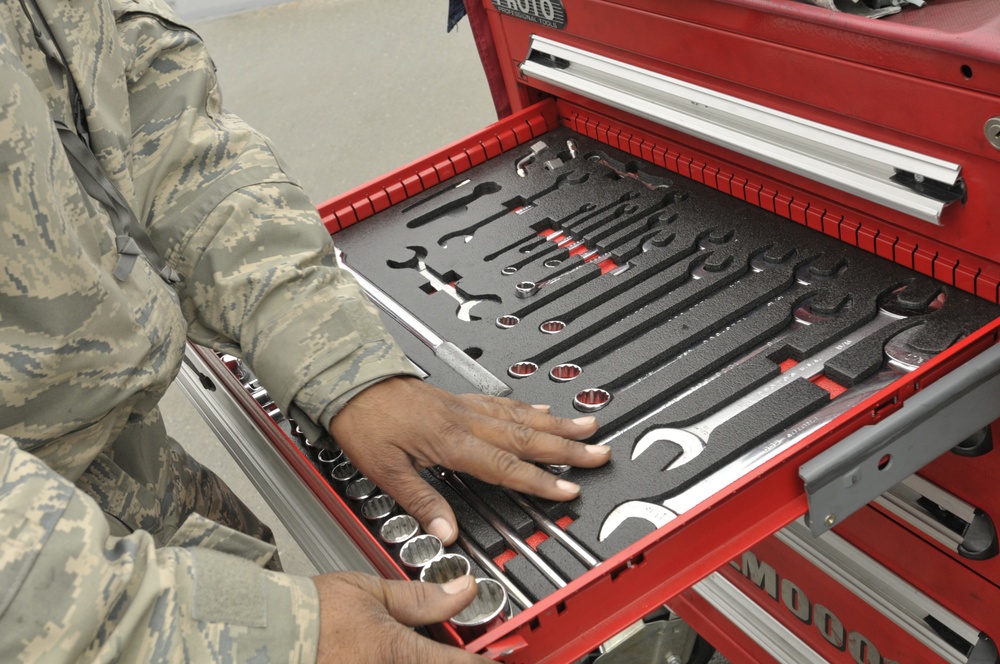
And that's because aircraft in general -- and jet engines in particular -- really don't like lost tools banging around loose inside. I didn't even work on engines, or even on aircraft, but the Air Force had adopted these policies service-wide to prevent accidents resulting from lost tools left inside engines.
Which is why it baffles me that surgeons can sometimes accidentally leave a tool inside a patient. Working on a real human body is way more important than anything I worked on ... and human bodies don't like foreign objects left behind any more than jet engines do. Plus, those surgeons are getting paid so much more than I did, and they even have assistants in the room to handle the tools for them. How the fuck have they not managed to have a similar system of tool accountability, preventing them from leaving tools behind inside patients?
Surgeons are considered money makers in hospitals, literally "the talent." If a surgeon punches a nurse, the nurse will be the one fired. If a surgeon sexually harasses a tech, even rapes a tech, the tech will be fired. If a surgeon makes life difficult for everyone in his department, they will work around him like a missing stair. If the surgeon comes in drunk or impaired, this "working around" gets tripled into direct coverup, where no one sees anything and no one knows anything. Reports are rote fabrications, as are incident reports; Joint Commission visits are scheduled in advance and prepared for (and their results kept non-public); when an incident occurs family members are routinely bullied; and god help you if you are an employee and you have a problem with any of this: whatever keeps the money coming.
Hospital HR departments are set up to maintain exactly this situation, to the point that even the internal complaint process is rigged, for example in a situation where per the employee handbook you as an employee must submit ALL your evidence up front, and no evidence added later will be considered. You might think, "Well, that's harmless enough, right?" No. What this does is game any complaint from the start: you as an employee generally can't sue successfully unless you have tried internal solutions first, and this way the hospital gets to see everything you have upfront, create a defense and/or coverup tailored to your proof, and then counter-accuse you with bullshit you cannot rebut because you never saw it coming and are not allowed to submit anything further. So you either have to sue, or accept being fired at some point, if you're not fired outright with whatever fabricated misconduct you get charged with as a result of bringing the complaint. Or you can just drop it and try to get on with your career somewhere else.
I have more, but you get the idea. These true experiences come straight from a very large hospital in the southeast US, one that would be considered "award-winning" in a major combined metropolitan area and is considered a "great place to work" based on salary rates. But inside those walls, people who work there usually and very quietly go to the smaller hospital across town when they need their own surgical healthcare. There are many, many great people that work there who are every bit people you would want on your own healthcare team should you need it. But in many departments, the ones that demonstrably aren't great are not the ones who get fired.
I'm sure other hospitals are better, but many are even worse. The very rare surgeon who does lose their job for cause anywhere in the US is out only because after a years-long road of internal complaints and related witness/complainant firings and employee harassment, one person, at great cost to their own career, doesn't back down, OR by a stroke of circumstance a patient who is harmed has the right connections to make some kind of justice happen, and then the surgeon moves to another hospital in another state. But that's rare.
And it's all about the money: surgeons bring in lots of cash, like oncologists and cardiologists do, and elective surgeries bring in even more. Who pays for all that cushy hospital administration? Surgeons, specifically, among others. You're 100% right that surgical mistakes can be eliminated, but not in a healthcare system that prioritizes profit over all else. If that surgeon has a pulse and can get to the hospital without getting arrested for DUI, guess who's doing your surgery? Hospital HR departments protect "the talent," simple as, and state licensing boards aren't any guarantee either: they're staffed with MDs who all went to the same schools as the people whose professional conduct they are entrusted with overseeing.
specifically elective surgeries is the money maker, like cosmetic or minor reasons, not a serious condition.
Gallbladders would like a word. Those things are made of gold.
But pee is stored in the balls
Solid post. #2 stings extra, extra hard when you learn that in the USA doctors spend on average somewhere between a quarter and half their time (studies vary) with insurance nonsense. We could potentially DOUBLE (or, low end, increase by 1/3 which is still insane) the number of useful doctor hours tomorrow, but we don't. U$A
i assume you meant the residency program, yea that is such an abusive program that should be revised decades ago. i wonder if the medical admissions remain constant to med school or it declined. i know some people try different ways to get into the MD industry in AMERICA, EITHER AS foreigner/immigrant MD, or go to a questionable foreign medical school, apparently its tougher if you come from a foreign country as an MD.
I'm not OK with it and I vote with this specifically in mind.
my gf is a nurse and it is absolutely bonkers how the healthcare system works at all, shit is very run down and society as a whole needs a lot of shifting for how taxation affects the health care system. tax the fucking rich and make them pay their fair share and siphon that into healthcare.
gop states are poorly funded i assume, since they have on or few large hospitals that accomadate your needs
This is actually an interesting question.
They experimented with “office hours” for doctors and patients were dying more than double/triple shift.
This because the information lost during handoff was more valuable than doctors being more tired (and by consequence doing more mistakes).
This is a textbook example of the risks of lost context
I fully agree with this as far as why they do extended shifts of 12 hours or more. But, OP did say double and triple shifts so they might not be just referencing the longer shifts. In that case it is corporate greed.
I'd like to see those numbers. I'm not finding clear numbers on shift-length mortality. This meta review (Systematic Review of the Impact of Physician Work Schedules on Patient Safety with Meta-Analyses of Mortality Risk, 2023, DOI: 10.1016/j.jcjq.2023.06.014 ) says
Limiting all resident physicians to 80-hour work weeks and 28-hour shifts in 2003 was associated with an 11% reduction in mortality (p < 0.001). Limited shift durations and shorter work weeks were also associated with improved patient safety in clinical trials and observational studies not specifically tied to policy changes.
I think we can all agree that a 28 hour shift is fucking insane and that anybody doing such a long shift will not be of sound capacity.
And if hand-offs are killing more people than work hours, then that just means that the hand-off procedures are terrible. I'd want to see what kind of hand-offs are being compared and if hand-off methods have different patient events.
I've also heard that and it makes sense, but if it's a statistic already at this point, can't it serve as a way to improve information storing and handover? I have nothing in common with the medical industry, this is just an outside observation.
I mean, did they increase staff numbers proportionally to hour reduction or did they just have people go home? Because if it's the latter, then duh.
The greatest fear of capitalist administrators is that there might be a slow night in the hospital and a few employees have some down time to take a breath where no "production" is taking place. The shareholders would not be amused. That's why they staff hospitals with the bare minimum, paying them as little as possible and using them as much as possible.
Because one lunatic doctor had a cocaine addiction and could go days at a time without sleep, so he demanded the same from all his students who werent riding the white lightning, which inevitably left a deep cultural impact and expectation for everyone that followed to do the same, because "I suffered, so you suffer too"
Yeah but now they don't even really let them have cocaine anymore so it's just the bad parts left.
Huh, I forgot about this bit of history. What was his name again?
William Halsted if my sleep deprived memory serves me.
Doctor disrespect
Excuse me, but what?
Halstead was a brilliant surgeon who decided to replace sleep with cocaine, would stay up for a week straight then berate his students for not having the same “work ethic.” Over the years it’s morphed into kind of an initiation ritual where new doctors are forced to work, ironically, medically inadvisably long shifts to prove their dedication to the job. It’s insane and has led to countless injury and deaths from sleep deprived staff, but that’s just The Way Things Are Done.
‘How does capitalism keep the unemployed on hand?’ you ask.
Simply by compelling you to work long hours and as hard as possible, so as to produce the greatest amount. All the modern schemes of ‘efficiency’, the Taylor and other systems of ‘economy’ and ‘rationalization’ serve only to squeeze greater profits out of the worker. It is economy in the interest of the employer only. But as concerns you, the worker, this ‘economy’ spells the greatest expenditure of your effort and energy, a fatal waste of your vitality.
It pays the employer to use up and exploit your strength and ability at the highest tension. True, it ruins your health and breaks down your nervous system, makes you a prey to illness and disease (there are even special proletarian diseases), cripples you and brings you to an early grave — but what does your boss care? Are there not thousands of unemployed waiting for your job and ready to take it the moment you are disabled or dead?
That is why it is to the profit of the capitalist to keep an army of unemployed ready at hand. It is part and parcel of the wage system, a necessary and inevitable characteristic of it.
It is in the interest of the people that there should be no unemployed, that all should have an opportunity to work and earn their living; that all should help, each according to his ability and strength, to increase the wealth of the country, so that each should be able to have a greater share of it.
But capitalism is not interested in the welfare of the people. Capitalism, as I have shown before, is interested only in profits. By employing less people and working them long hours larger profits can be made than by giving work to more people at shorter hours. That is why it is to the interest of your employer, for instance, to have 100 people work 10 hours daily rather than to employ 200 at 5 hours. He would need more room for 200 than for 100 persons — a larger factory, more tools and machinery, and so on. That is, he would require a greater investment of capital. The employment of a larger force at less hours would bring less profits, and that is why your boss will not run his factory or shop on such a plan. Which means that a system of profit-making is not compatible with considerations of humanity and the well-being of the workers. On the contrary, the harder and more ‘efficiently’ you work and the longer hours you stay at it, the better for your employer and the greater his profits.
You can therefore see that capitalism is not interested in employing all those who want and are able to work. On the contrary: a minimum of ‘hands’ and a maximum of effort is the principle and the profit of the capitalist system. This is the whole secret of all ‘rationalization’ schemes. And that is why you will find thousands of people in every capitalist country willing and anxious to work, yet unable to get employment. This army of unemployed is a constant threat to your standard of living. They are ready to take your place at lower pay, because necessity compels them to it. That is, of course, very advantageous to the boss: it is a whip in his hands constantly held over you, so you will slave hard for him and ‘behave’ yourself.
from Now and After by Alexander Berkman, Chapter 5: Unemployment. Available to read for free here.
Even in countries where healthcare is socialised, they are run "efficiently" like a capitalist business by administrators who care not for healthcare but for finances, "balancing the books", and bean counting.
A lot of people have alluded to this already, but I'll simplify.
"We" are not OK with it. "We" are not the ones making the decisions
Hospitals and such are fine with it because they're a business now and not as much involved in the health of the public beyond making sure they can still pay them.
You know, healthcare jobs are the only ones I see “advertised” here in the Southwest. There are billboards for all sorts of medical careers. I’ve had friends and acquaintances talk about being a nurse as a backup career plan.
Nursing is a career path where you cannot rise to the top ranks. Nurses cannot ever rise above doctors, because the next step up is a doctor. The repeat clients in a hospital setting in the southwest are drug addicts or psych patients. The “average” person going to the hospital is going there with something severe. Not to say that everyone doesn’t deserve care, but know your patient base. Nurses are strapped in the entire shift, and being late from lunch is like being late to work. It’s incredibly stressful, and there are studies that essentially show that nurses are worked to the mental and physical limit in their lifetime.
Nurses are treated like shit, and there’s a steady stream of them leaving the profession or moving into admin positions where they’ll settle in; you’re way better off in every way to just aspire to the admin jobs with a master’s of public health. Tell your friends. You’re welcome.
i think its because GOP constantly attack healthcare funding, or it scares away potential health employees from working in those states, thats why they dont go to the red states, plus, they are now so desperate they are willing to pay MDs and some nurses to work there some bank apparently. i dont think they care about getting promotions, if thier COL is met, in many places they are making bank from just working shifts in the region(travelling nurses). i notice obesity related clinics(surgeries, do make bank there because the south is so overweight). seems healthcare quality in the south is quite lacking in non-affluent or blue areas.
My personal take is that since doctors are all paid commensurate with the cost of housing, they can go literally anywhere they want.
I’ve noticed over the years that here in AZ, many doctors here long term are centrist politically, unless they’re working for an aid organization like the AIDS foundation or a clinic that caters to the “needy”. Those that live here, want to live here. That said, the ones that aren’t in love with AZ dip out with no warning lol. Me personally, I’d move to Cali with zero hesitation. When abortion was momentarily made illegal here a few years ago, doctors just fucking left, mine included lol.
Nurses can absolutely advance careers.
Either through more training to become a professional in a specific topic (or expanding to freelancing on the side) or going into a more administrative part of the hospital like schedules, ordering etc.
But medically speaking, you are right. Only as far as you can until you need to study humane medicine.
Nursing can advance quite a bit. A nurse can become a nurse practitioner, for instance. NPs can even open their own practice in some places. Or get a DNP, become a doctor nurse. Sure that pushes one more towards the admin side, but that doesn't mean it's removed from the world of nursing either.
But I guess one could say the same about being a physician as well. Where is there to go? It's not really about advancing positions, but just doing more stuff that gets you paid more. Whether that be research/education/administration/specializing/whatever else.
How is nursing a backup? Are the requirements that low in the US (I'm assuming "Southwest" is in the US?)
No, the requirements aren't that low. But there are levels of nursing. Each requiring different levels of education and licensing. From LPN, Licensed Practical Nurse the entry level that takes about a year, to RN, Registered Nurse, can take 2 to 4 years. A 4 year BS degree is a degreed RN. Then you can continue to other licensing degrees like RN-P, Registered Nurse Practitioner-- with a limited doctor scope of medicine to take the pressure off of General Practitioner doctors. And a host of specialties nurses can go into. With median wages around $90,000US. And easy opportunities to earn well over $100,00US per year.
Much of the staffing issues centers around many nurses wanting to only work 20 to 25 hours a week. I have a friend that was head of a nursing department in a hospital for many years, and she was always complaining that she couldn't get nurses to work more than 30 hours a week. And most refused to work more than 25 hours.
dint know they all wanted part time statuses, it make sense since they had to work 40+ for a long time. plus nursing seems stressfull , if you give your bosses an inch they will take a mile with your hours.
With how hard nurses work, I wouldn’t work more than 30 either lol. I’m willing to bet they’re doing 3 10s, some overnight. My aunt does 3 12s in 3 days then takes 4 days off.
Nurses don't need much training for the lower tiers (e.g. bed pushers).
Or you can change careers and need to do training but the barrier to entry is IMO way lower than say business analyst where you need to know economy topics.
Diagnostics do doctors, medicine orders do doctors. What do nurses do that arent ordered/instructed by doctors beforehand? And what about it can't be learned a few months in advance?
ive been seeing alot OF NPs, they get higher pay and can work in somewhat as a standin for PAs/ or MDs, my last healthcare group plan had mostly NPs.(they rotate all the health professionals like paper, so there is pretty much a high turnover, but its for the benefit of the PAs/MDs or NP, since the health network was more of starting your career type and getting more experience.
I know of a relative that is officially "just a" trained nurse (with various additional qualifications).
But the kicker: Doctors come to the relative for advice.
A studied medical professional overcame their ego and asked a nurse for advice.
I am working in IT with medical personal as my client. And instructing/giving advice to them is usually more like pulling teeth because they feel they are higher on the totem pole.
Some do listed to me but others...Man...
i noticed some of them USE AI to write thier notes, after going over some of the notes after the visit by the doc, its somewhat illegible, mispelled words and other wierd context.
We're not. But, just like AI, executives with the ideology of rapists don't care about our consent.
Who would've thought that running every industry and business like mini dictatorships would backfire? Thanks capitalism!
More like the ideology of slave masters, which includes rapists plus oh so much more.
Who's we? I'm certainly not okay with it
Yea, "we" the people are not okay with it. "We" the profit driven corporate vampires are okay with it because "profits".
No one does this outside of the USA. It is not at all normal, just like being stuck with the imperial system of measurements.
What are you talking about? I live in Europe and this is standard. I know midwives, nurses, and doctors and they have the worst work schedules. I think in France health workers can even be prohibited from striking. The government declared it an "essential" job and when there aren't enough workers, striking isn't allowed. THey are always understaffed, so they aren't allowed to strike. GReat eh?
En France vous avez des lois qui limitent le maximum des heures travaillés par semaine. Oui dans des cas éxtraordinaire c'est possible de les ignorer, mais c'est une grande difference en comparaison avec les états-unis, où ils travaillent pendant 24h sans pause comme c'est une chôse normal
Not really true. At least in Germany, the health workers are also extremely overworked. From nurses to surgeons. It's a big problem
Source: family and friends who work there
How many hospital administrators making 7 figures are working 24hr shifts?
In Deutschland gibt es eine gesetzliche wöchentliche Höchstarbeitszeit. Ja die kann in Notfällen undso überschritten werden, aber die Leute arbeiten nicht oft 24h am Stück ohne Pause als wäre das etwas völlig normales
In theory, absolutely. Sadly, not always followed
I've worked with surgeons in US and Europe. It is definitely worse in the US but surgical culture is also like this in Europe just to a slightly lesser degree.
It's deeply rooted in medical / surgical culture and much of it comes from not wanting to pay for more of these highly trained workers when you can just squeeze more out of a smaller cohort. Issues with handoffs for patient care are real with shift type work, but this could be improved if it became more standard.
Gen Z is a bit more concerned about these kinds of issues so some changes may be happening soon, but ultimately this will not likely ever self regulate and only legislative changes would effectively change this culture.
It is simply the law.
For example, in Switzerland, no employee may work more than 45 hours per week in the normal case (there are exceptions). Even if the employee and employer agree to ignore this, the employer will get absolutely rekt by the (mandatory) insurance if anything happens to the employee - even an accident in the employee's free time.
It's not the same, but similar, in other European countries.
Surprise! Everybody in the world is stuck with imperial system. Got a car that's all metric? Wheels and tires are in inches. (Yes metric tires are still using inch rim measurements) Every tool on planet earth weather the sockets are sae or metric? All turned by a 1/4, 3/8ths or 1/2 in ratchet. Clearance too tight on ur bottom end bearings? Measured in thousandths of inch. I could go on, but it is incredible what imperial leftovers there are all over the planet that persist through time!
There's a not-so-small difference between weird and annoying leftovers in specific areas and going all in with it in everyday life and still teaching it to every child.
Right, I was just highlighting the fact that globally we ARE still stuck with imperial system for shit that gets used daily! I can't fathom why we haven't moved to centimeters for rim measurements, and why so much machining is still done in thousandths of inch. There's also no good excuse as to why every lathe and CNC machine on planet earth has 1/2 in chuck keys instead of 13 mm, why ratchets use a 3/8ths drive instead of 10mm. It's just instilled from decades of use and nobody does anything about getting away from it in automotive or tooling! I'm sure there's lots of other weird leftovers in other fields, just naming the ones I work with on a daily basis. At least nobody is producing shit with whitworth standards anymore, although I do occasionally have the misfortune of having to work with that as well.
If I recall, most medical mistakes take place over shift changes. Things like a patient getting a double dose of meds because they didn't realize the prior shift already gave them. The idea is that minimizing the number of shift changes reduces the number of mistakes.
This is accurate. It has to do with minimizing handoff risk.
https://pmc.ncbi.nlm.nih.gov/articles/PMC7539758/
Lots of uneducated responses in this thread that are pure conjecture and drivel.
That study doesn't really address the issue here though. That study demonstrated hand-off risks. But as far as I can read, it didn't address shift length at all. All the providers in question had 8 hour shifts.
Obviously hand-offs produce certain risks. But that's a trivial question. Obviously changing shifts will have some negative effect as providers must get up to speed. But the right question to ask isn't "do hand-offs produce risks?" The right question to ask is, "if long shifts are used, do the reduced medical mistakes from the shift change counteract the increased medical mistakes from fatigue and unreasonable shift length?"
Do you have any studies that show this? Otherwise the benefits of long shifts are pure conjecture and drivel.
It's a balance between minimizing handoffs and ensuring fatigue is managed appropriately.
https://www.nurseregistry.com/blog/12-hour-nursing-shifts-pros-and-cons/
https://www.hseblog.com/frms/#%3A%7E%3Atext=Healthcare+has+long%2Cthe+key+benefits
Yeah but those studies are about longer shifts (12 or 13 hours), not doubles or triples as OP asked. I don't know how common it is for nurses to have 16-24 hour shifts, but it seems like that was the original question.
When I worked as a nurse in CA, the standard for shifts was 8 hours, we had 3 shifts in 24h. Some travel nurses took 12h shifts, but staff RN had 8s. Not saying we never made mistakes, but it can be done with proper staffing (4 patients to hand off instead of say, 7) and a culture that respects the handoff time. We did it at the bedside in most cases so the patient could hear what was going on. In CA there are strong unions advocating for patient safety, and as a result, minimizing exploitive working conditions. We were still exploited to be sure, but not like if you’d dropped that hospital in any other state without those protections. Pay was outstanding as well.
Strong unions are the answer to this problem, at least for nurses/support staff. Idk about docs and residency but that is a big part of why becoming a doc never seemed attainable to me.
As a patient I really liked bedside handoff. Because I'm supposed to theoretically be in charge of my own care, right? Can't do that unless you tell me what's going on.
do the travelling make more than the ones staffed in the hospitals, i heard they do in some areas.
It depends on several factors, the staffing company, specialty, etc. but yeah they probably make a little more, but there is the trade-off of longer shifts, health coverage (mine was 100% covered by the HMO I worked for), and workplace culture. But even staff nurses had opportunities for extra shifts or staying extra to make a little more money. My base pay was good enough the thought of staying one more minute over almost never appealed to me, though.
that make sense, if there is a region that is very understaffed i assume those place would pay alot more too.
Yeah during Covid you should have seen my inbox, recruiters offering like $12000 sign on bonus for 9 week contracts, like $4000 a week in rural New York or Florida. But I had fucked off to Norway by then so, wasn’t for me. And I’ll never work as a nurse anywhere but California anyway (until the other states follow suit and mandate safe staffing by law).
yeah our unit recently started a "quiet hours during handoff" policy. Patients kept coming up to the window to ask for drinks which is both a privacy thing and a more interruptions = more mistakes thing. Patients hate getting told to keep it moving but like. Trying not to kill you here bud.
I’ve never known a thirstier bunch of people until I was a nurse, and I used to wait tables. Like surely you’re not going through this much liquid at home.
The study only concludes that this manner of handing off is risky, nothing more. Going "our method of handing off is bad, so we will extend work hours and continue handing off in the same way" is piss-poor conclusion. Change the way things are handed off e.g let the physician tail the other physician for 1hour to 30 minutes into their shift, improve the data collection and data display methods to allow a clear patient status to be shown, etc.
Additionally, the study doesn't compare handoff risk to work-length risk. You're taking one single data point and drawing wide-ranging conclusions from it.
This is the explanation I’ve heard. It seems like someone should have thought of a better solution by now, though.
I mean, in my experience a lot of those "mistakes" are kind nurses saying "fuck this idiotic Emergency Department Physicians Assistant. Someone go get the MD. This patient is in a shitton of pain why did they only prescribe a half a milligram of relief? I cannot find the patient's face or butt or really tell the difference to tell how much pain they are in exactly though so I will just write down a 7. Whoopsie poopsie they just got the dose twice oh no look at them they are not screaming anymore we will call treatment a success" type mistakes.
But I have also had some very excellent nurses
This! The long shift benefits the patients.
The number of hours worked per week is what should be reduced (without loss of pay).
Most of them actually. Am a nurse and was once psychiatrically hospitalized alongside a train conductor and we really bonded over our ridiculous and yet supposedly "high reliability industry" jobs. She actually got hooked on speedballs because there's some weird loophole in our state where the train conductors need to give something like 48–72h notice or something to take sick leave so most of them just show up for their 16h shifts fucked up on amphetamines to stay awake then benzos so the amphetamines don't give them tachycardia and one of her managers actually basically gave her a pep talk on which doctors to go to and what to say to get them prescribed legally but given that they're both extremely addictive substances her dosages spiraled wildly out of control extremely quickly such that she was only able to get effective doses extralegally. On the plus side though losing that job and getting shipped to the other end of the state just to find a bed got her away from both her dealer and her cartoonishly abusive ex (even a week into her stay the bruising was pretty wild). And then actually when I left the hospital my third time I met my now husband in partial although we lost touch for like a year until we ran into each other again and he helped me escape my much more subtly shitty relationship and actually graduate / get licensed (if you think nurse pay is shit I was getting paid $12.50 as a nursing assistant working with criminally insane men and that was after the promotion).
that train disaster in '23 is telling how badly understaffed purposely the trains are in america, that companies that own these are unwilling to pay for more staff, or give any time off in short notice to people. is that a CNA job? that is not even worth the stress, might as well work for a grocery chain or walmart at that point.
This was back in 2015ish, they're probably making ~$20/h these days but still. Yeah some people had a CNA but a lot of that job was people that were unemployable elsewhere for reasons other than straight up crime (for the most part, anyway. There were a few employees with DUIs, public intoxication, etc). I was young and had found out about the job from being hospitalized there and went back because from the care I received I figured it couldn't be that hard to be better at that job (it wasn't, but not by as much as I would have hoped) and, most importantly, I wanted to #HelpPeople.
The upside is that job on a psych nurse resume is basically an instant callback. I might get paid shit but as long as I'm upright and don't have too bad of a TBI I'll basically never be jobless. I've gotten callbacks within 12h of applying, one of them I didn't even finish / submit. I also graduated early into COVID then worked straight through so my resume is just overall fucking baller. If I wasn't too AuDHD to deal with learning a new hospital every 12 weeks I could probably make bank as a travel nurse. I really enjoyed teaching self defense and restraint classes this last year so I really just need to go back to school and get my masters.
And compared to when I was young and stupid people listen when I start telling stories so that's been somewhat affirming. It'll probably make an utterly wild memoir if I live about 30 more years. Hubs says he wants to take me to one of those crowd work shows because siccing me on people at parties is starting to get boring.
I'm not really OK with it, but I never got a vote on the subject.
How do you mean? Are you too young to vote?
I imagine they mean that it's not something we have a choice in deciding. There's no literal vote for it, those running health care facilities and making staffing decisions don't care what we think. It's not even like other decisions where we can do research and make ethical choices. If all the hospitals do the same thing and we need urgent medical care, it's not like we can say, "Oh, I'm not going to that hospital because they won't treat their staff right."
No. As in it was never put to a vote, at least not to the general public or to the rank and file medical workers.
The decision making center of your brain is the prefrontal cortex. It's the really thinky bit. It is what does the explicit thought about novel situations. When something is done "instinctively" or out of habit, that's usually handed off to the amygdala. It's used more for stuff that you've done many many times before.
When you are tired, haven't eaten well, and any number of other conditions that overworked and overstressed doctors face, your prefrontal cortex will do a lousy job. The amygdala will actually secrete chemicals that inhibit the performance of the PFC. As such, routine things are probably ok. something novel comes up? Bad times.
I'd prefer my doctor is well rested and in a good frame of mind to make quality decisions, thank you.
We're not.
We're just powerless to change it outside of our local jurisdiction.
We aren't "powerless". Every time we go to the voting booth we can change things a little. If people vote for a conservative party that keeps wanting to move the needle backwards to "the good old days", this is the shit we will get: underfunded healthcare, an ever-hotter world, war in the Middle East, untaxed uber-rich, and overworked essential workers.
Momentum is hard to overcome and it’s been done this way for many many years
The guy who is largely attributed to making the medical residency system so punishingly difficult in terms of hours was coke addict btw. William Stewart Halsted. That was like 1890 and residents didn’t have their hours limited until 2003 (and even then, barely)
Yeah, I saw that they were "limited" to 80 fucking hours a week (in the US). Quite the limit.
Having been chronically overworked for a while in my profession, the last thing I want is my life in the hands of somebody chronically overworked.
At least in my profession the mistakes I made because of being so tired did not kill anybody or handicapped somebody for life.
My thoughts exactly. Overworking is bad in general, but in life-or-death industries, it shouldn't be happening.
Can I introduce you to EMS and firefighters 24 and 48 hour shifts?
Yeah, but that's not constant work over that span. Most of it (and frequently all of it) is just sitting around the firehouse waiting for a call. In the meantime they can eat, sleep, watch TV, etc.
Edit: Ok, ok, there are duties that need to be done around the station so it's not all sitting around. But it's also not fighting fires 24 hours straight.
HA! Maybe firefighters, but EMS gets to sit around the firehouse once in a bloody blue moon. The 24 hour shifts suck, because the chances of you actually getting to sleep during the night hours are incredibly low.
Sure, there are going to be differences based on where you are working, but generally EMS is nearly call-to-call.
On a good shift, yes, we have down time. My current job I am usually lucky and get time to sit around, but it's not generally as relaxing as you'd think because at any time I need to be up and out the door within 90 seconds, so I'm always mentally in go mode.
My last job I didn't do 24s, but I did do 16s, and I had to work a lot of OT to pay rent, so it was not uncommon for me to work 6 days/80 hours a week and I definitely did not spend time sitting around the station. I was almost always out running calls. I'd come home, sleep for 3/4 hours and be out the door again to work.
Not trying to do the suffering one-upsmanship. I've had to do clinical shifts in the ER for my schooling and I hated every moment of it. I don't think you could pay me enough to work in a hospital, it's not my thing. I have deep respect for my nursing homies, I love them and always have had a great working relationship with them. OP commented that they don't know any other jobs with such ridiculous working requirements so I added two.
Fair enough.
In an ideal world those 48 hour shifts involve zero work
Why do people constantly fall into "suffering one-upmanship" when discussing making things better? Who does that benefit? Why not simply agree that it's wrong and work together to solve both problems?
i saw shorts of a young guy that was doing skits of being EMS, seem extremely stresseful to be up 24/7. i went to CC with one or one that works adjacent to that.
...Yes, they suck, but don't you dare take my long shifts away from me. The delicious nature of the suckage of a long shift is that you then have a long break.
You know what's funny? I actually think the situation is a lot better than you're making it out to be.
You're not entirely wrong. There absolutely are positions in hospitals where people do insane schedules like 24 or 48 hour shifts. But that's mostly concentrated around emergency medicine, trauma, surgical residency, ICU coverage, and certain on-call specialties. There’s definitely a culture surrounding ER staff and surgeons where sleep deprivation almost gets treated like some badge of honor.
But the majority of the medical world in America does not operate like that.
Most hospitals primarily run on normal shift structures. Nurses on regular floors and patient wings are usually working standard 8 or 12 hour rotations with multiple shift changes throughout the day just like any other industry. And once you get into private practice, some doctors are only in office a few days a week seeing a relatively small number of patients across different locations.
People also forget hospitals are not run exclusively by doctors and nurses. They're massive operations with huge amounts of support staff, technicians, imaging departments, transport, administration, custodial staff, billing, labs, and so on, most of whom work completely normal schedules.
So yes, what you're describing does exist. But I don't think it's remotely as universal or apocalyptic as people make it sound. A lot of public perception comes from dramatized media where every hospital is portrayed like a nonstop trauma center operating at DEFCON 1 twenty-four hours a day.
Of course not. People take naps when it dies down in open rooms.
Wait until they find out about pilots
Or public transport operators
this is bad
this is just as bad
I think we agree
Iirc, here in the UK it’s illegal to ask a doctor or nurse to work s triple shift. I think it should be for doubles as well, excepting major emergencies which involve a sudden influx of patients
A double shift is 24 hours. Medical shifts are 12 hours.
Yikes. Might be needed in some surgeries though
Neurosurgery can be 14 hours or more, and in that time, no breaks, lunch or peeing. All in one small room.
That's insane. I'd have to get a wine hat and some kind of piss jug rigged up.
Catheter condom. Also handy for road trips.
I agree. Same thing with truckers driving to long. Part of it is the culture. The worst is when they get out of medical with residency and such. Its that frat type of. I had to do it so so should they.
we arnt, but its the NETWORKS, hospitals pushing them to do it. mostly as a way to solve the shortage and to cheap out on hiring more staff. PLUS EQUITY companies are buying doctors as well making it worst for the above.
at least from my insurance HMO, and other insurances, they MDs are pushed to only 20min/patients max, so they have to go through tons of patients in a day burning them out. a doctor which was my pcp havnt seen for more than a decade was visibly stressed from all those patients she had to see.
also lets not forget the MD industry is gatekept by the AMA, they limit how much licenses they will allow every year+ the immense amount of time fOR medical school+ costs, and then post school training.
There's a number of factors at play and rest is only one of them. Other factors are cost cutting in hiring and risk of information loss or error during patient transfers.
Because the wealthy can afford to have well-rested medical professionals at a moment's notice. Elites would care much more about the wellbeing of the typical doctor, if they had to have the ordinary doctor working on them.
Because health care is a service and not profitable except when selling Drugs. Thats the unethical incentive behind addiction and the opioid crisis.
The better question is why are the US Labor Laws still shitty. The Scandinavian countries leave everybody in their dust trail and the USA should simply copy them. Good luck finding the politicians, uncorrupt ones, that will change the laws.
I think basically everyone, if you ask them directly, would agree with you. The issue is cost disease. In order to continue attracting workers to the medical profession, institutions must raise wages. Raised wages means more cost for the institution. But no medical institution gets a blank check to run its operations. So institutions are constantly looking for ways to save money, which often means hiring fewer people and making their existing workers work longer hours.
Medical institutions make billions, the CEO rates are insane. They don't have to be
According to some random googling I did, the largest health care provider in the USA is HCA Healthcare. In 2025, their CEO made $26,456,606. Meanwhile, they had 316,000 employees in 2024. If the CEO were fired, that would mean each employee could be paid an extra $866 per year. The company's total salaries and benefits came to $32.2 billion in 2024, averaging $107,333 per employee. Firing the CEO could result in hiring an additional 260 full time employees, increasing the number of employees in the company by 0.08%.
So based on this napkin math, you can be opposed to CEO pay on an ideological basis - but not on the basis that it would have a non-negligible impact on this specific issue.
It's not so much the CEO's direct pay. It's what they are paid to do. CEOs generally get paid to maximise shareholder dividends and stock value, which leads to them doing anything they can to minimise the staff's wages, and minimising the staff in general, to keep down costs, especially in something where inputs and outputs are not strictly correlated, like medicine, where you can't hire 10% more nurses and expect to get 10% more patients paying bills. The CEO's work probably hurts everyone involved except for the shareholders, but it increases profit margin so they do it.
This is a fair enough critique of the US system.
But to the topic of "why are medical staff overworked?" we see this in countries other than the US as well. Typically because even if institutions arent trying to maximize shareholder value, they are still having to make due with limited funds allocated to them by the government in the face of rising (or potentially rising) healthcare worker wages.
The rising wages of NHS healthcare workers are only a problem if the taxes are not being levied to cover it from the profits the care enables. Without medical care, companies would have more lost productivity, which is the non-moral/economic motivation for an NHS. If the extra productivity were reclaimed in the form of corporate taxes, there would be no budgeting shortfall.
Sure, but there are a few problems here.
First is that the total cost of a health intervention is not fixed, and there is always a give and take between providers, who want to provide better care/make more money, and whoever is paying, who wants good care without overpaying. Writing a bureaucracy a blank check is never going to happen.
So you would need to quantify how much reclaimed productivity you are gaining, which seems like a rather fraught endeavor.
And most medical care provided to people in developed nations is care provided to the elderly, who are not in the work force. So your productivity reclaimation tax would still have a shortfall, which you would need to make up somehow. And voters tend to not like higher taxes, so governments tend to not want to raise them, even for reasonable things like adequate funding of medical care for seniors.
not fixed [amount]
... to quantify... seems a fraught endeavor
And yet people have calculated it in the past and do so regularly. It's their job. We aren't qualified or trained to do it but they are, so they do.
adequate funding of medical care for seniors
This is where the moral arguments come in and society either taxes corporations more than the productivity gain because people are more important than company profits, or denies service to the elderly because company profits are more important than people. It would be a twisted ideological view that the tax has to be precisely equal to the value given to the companies, regardless of outcome.
averaging $107,333 per employee
That is far, far, far greater than the average of their CNAs, nurses, custodial staff, basically the bulk of their workforce is either at or near minimum, or making around half that if they're the higher paid chunk of the vast majority of the workforce. I'm willing to bet the top 10% makes close to 90% of the wages
I mean, it also seemed high to me. My guess is
- Employee benefits (like, ironically, medical) are more expensive for the company than we would assume, but aren't included in nominal worker pay.
- The company subcontracts out its lower wage work, like custodial staff or CNAs. So it ends up paying a bunch of doctors $200k per year, and twice as many nurses $50k per year. Assuming this custodial staff don't count in the metric I found, since they aren't on payroll. And we could argue that CEO pay could be directed to them as well.... but then we are just splitting the pie more ways.
Of course, if you have some proof that 90% of those wages are going to 10% of earners in the company, I'm all ears. But I kind of doubt it.
Hospitals shouldn't be "making money" directly. They are there to heal people. A healed worker is an indirect gain to the economy. Good care and good prevention mean a stronger, fitter, and more productive society.
I bet that the better the care a hospital provides, the less recurring patients it will have and the quicker it will be able to release patients.
I mean, I didn't say anything about making money. Public institutions will face the same pressures in the face of rising wages outside the healthcare sector. Hospitals are filled with old people, who are sometimes racist assholes, who need their bedpans cleaned. And whoever needs to do that cleaning needs to get paid a competitive wage. And so if a public institution isn't allocated additional funds to compensate for increased wages (and bureaucracies and legislatures hate increasing funds) they will need to find a way to save money.
Also, a very large portion of people in hospitals will never work again, as they are the elderly. Of course, we should care for these people - but just saying that if you try to take an economic prodictivity tack with your argument, you will run into this problem
This is why a very conservative estimate of 1/20 hospital deaths are attributed to medical error.
Capitalism has no pity.
I'm not sure I'd say we're ok with it. But what's the alternative? Die? Not really attractive either.
We should just start supporting policies that improve the conditions of the healthcare system, but, that would require a majority of people agreeing to improve things globally. Good luck with that.
We should just start supporting policies that improve the conditions of the healthcare system, but, that would require a majority of people agreeing to improve things globally. Good luck with that.
How is that not "being OK with it"? Healthcare has been underfunded for decades and we just accept it. The majority consistently votes on "lower taxes" and now it's "iMmIgRaNtS". Healthcare barely matters - unless it's COVID, then suddenly it's an issue.
we just accept it
I don't know about you, but I pretty much don't accept it as it is, and when an opportunity is given, try to nudge things in the right direction. This requires huge, nationwide changes (no matter what country you're in). Not having much leverage individually does NOT mean "accepting it".
Because the results of malpractice only kill, maim, or injure one person at a time.
In aviation, however, the consequences are much more visible; so commercial pilots have regulated limits to flight duty.
E: What I mean to say is I am not ok with this, but what happens is it’s easier for politicians to ignore. It should not be this way, and the current practice of ridiculous hours for the medical profession is properly fucked. Aviation has flight duty limits precisely because it has affected so many at once. In the industry they say that the regulations are “written in blood”.
Funnily enough, those duty cycle limits played a significant role in history's worst aviation accident: The collision of 747s at Tenerife.
The short version of the story: There was some bomb threat at a European airport, so traffic bound there had to divert to wherever else they could. A lot of them ended up landing on the Spanish island of Tenerife, at an airport not used to handling that much large aircraft traffic. This included two 747s full of passengers.
When it was time for them to go, a thick bank of fog had rolled in. The taxiway was apparently not suitable for 747s so they had to taxi down the runway. The first of the two 747s had taxied to the end of the runway and was in position and ready for takeoff. Extremely ready for takeoff; the captain was pre-occupied with a recently tightened air crew duty cycle policy and was anxious to get home before going over his hours.
The second was taxiing up the runway straight toward the first, and had missed a turn off the runway, so they were kind of jackknifed across the runway trying to figure out where they were.
The captain of the first jet decided to take off without clearance from the tower. One 747 under full takeoff power T-boned another 747. Nearly 600 people died.
I'm all for crew duty cycle rules, we shouldn't have exhausted pilots at the controls. Something that has kind of shut my life down is the notion that even our good laws turn poisonous when interpreted with absolute strictness. A pilot afraid of breaking the "You're not allowed to over-work pilots because flying tired is unsafe" law killed 583 people including himself.
The video I linked above calls it "The Worst Air Disaster In History." It's one episode of a long-running series, and they always feel the need to come up with some similar line, so some of them are "The worst single-aircraft disaster involving a non-American made plane operated by an American airline to take place during daytime." I think my favorite quote from the show was during the Cross Air CFIT episode, "On board was Passion Fruit, Germany's answer to the Spice Girls."
I'm not okay with it but it's the type of problem that can only be solved by them. They have to go on strike and protest.
In a vacuum, yes. The problem is that when, say, chip fabricators go on strike, orders for microchips don't get fulfilled on time and the company loses money. When SAG goes on strike for months, movies get delayed, and people usually cheer them on in solidarity. When MEDICAL professionals go on strike en mass, people will die... Quickly, in some cases. People say they support us, and I get a free breakfast once a year at Denny's during Nurse's Week, but nobody's going to cheer on the picket line outside when their dad or grandmother is INSIDE, sitting in their own poop, or not being fed, or having respiratory distress.
You don't go into nursing for the money or easy work. You don't even do it because it's "just a job to pay the bills" because there's way easier ways to make this little money. You do it to because you're the kind of person who is more fulfilled by helping a stranger than by helping yourself, and those people are not ok with risking the life and safety of their patients over a shift differential. A LOT of nurses would cross the line to help them anyway, which would negate the whole effort.. It sucks, but that's it.
I've been a nurse for about 10 years now after getting out of the military, so I have some perspective on this, but I don't know what the way forward is without letting a couple of vulnerable people die to catalyze change in the field.
I understand, but you guys are setting yourselves on fire to keep society warm.
In Japan when bus drivers go on strike they don't stop the buses, but they stop taking bus fare from riders so the company doesn't get paid. Maybe something involving medical notes so they can't get billing codes.
That would be the perfect balance, but we're not the ones taking the money like the bus drivers. Even if we were, they can always send a bill later. Messing with the notes would be falsifying medical records, which is one of the Cardinals sins of healthcare... and is also a crime.
Hey, regarding false medical notes, I've got a recently discovered whopper of falsehood. I'm going to keep this vague.
Patient suddenly can't walk/stand, has very limited sensation in lower limbs. Goes to ER, spinal cord compression protocol clears and they are admitted. Long weekend of no progress. Patient leaves in a wheel chair, almost no change in symptoms.
Years later, they are collecting medical records for new doc and discover the notes from that stay in the hospital saying that all the symptoms spontaneously resolved before discharge. Wtf
Miracled! I wonder why they would lie about it, unless money?
Nurses can and do strike. People support them because organized nurses who can enforce collective decisions provide the best care.
There was just a victory in New York:
https://www.ajmc.com/view/historic-nyc-nursing-strike-ends-with-3-year-contract-wins
I'm aware this has happened a few times, but I don't fully understand how. I keep meaning to look into it further, but I've never seen a detailed explanation of who was caring for people while this was going on. Maybe it's buried in one of those articles somewhere, but I don't have time to read through them right now.
Nurses strike all the time.
Here is a list of some strikes in US only. 2026: https://nurse.org/articles/nurse-strikes-list/,2025: https://www.beckershospitalreview.com/hr/7-healthcare-strikes-in-2025/
Sometimes they maintain minimum care. There is advance notice provided. Nurses can also do things like provide care but not chart it in the correct way to get "counted" by their funding model. So the employer loses money while patient care is if anything improved.
We have to vote. They can't be left alone.
We vote, but it's not enough.
Do you? Do we? We currently consistently have about 20-50% of the population in Europe voting for far-right to conservative - parties that don't give 2 shits about medical staff unless they require treatment. And even then, some of them don't care about them because "do your job and stop whining".
And that's just the people that vote. At municipal level the voter participation is abysmal.
It's the same situation in the US. My own mother votes for the most vile Republicans against our interests because she's been so stuffed with hate and tribalism from Fox news all she cares about is that dopamine hit from "my team is winning". No amount of reasoning will overcome that addictive hit of dopamine.
It's a carefully manufactured propaganda machine funded by people with power we could only dream about reaching out from here to the EU.
Even the youth here in the south vote against their interests because abortion and immigrants bad jesus good. Education has been dismantled and even if they knew what was going on our districts are so gerrymandered it probably wouldn't matter.
People need to be inoculated against billionaire propoganda, but how do you do that when they control the media and schools?
We're not going to get anything done done within the system because they control the system. Strikes and violence or extremely disruptive protesting are going to have to happen.
Capitalism can only provide basic services to everyone if those services are borderline slavery. It works for all the basic needs : food, healthcare, construction.
One might say it only works through slavery for everything because most of the non essential things come from other countries you can call colonies. But the thing is that without redistribution the basic services cannot be paid correctly.
Healthcare isn't the same as other jobs. It's better to do several 12 hour shifts in a row for 3-4 days than to take 5-6 8 hour shifts in a row. It's better to do them all in a row at once rather than take days off in between. Work when you have momentum. You will burn out a lot faster if you work every single day, even if it's for a short period of time.
Isn't OP asking why not 8-12 hour shifts instead of 16-24 hour shifts though. Probably not suggesting more days either.
The best justification I've heard is that every time you change doctors or nurses at a shift change you introduce discontinuity of patient care. Meaning more opportunity for error. I'm not saying it's a good justification, just the best I've heard.
Dunno where you're from, but insurances are also partially to blame for this. They limit patient appointments to a few minutes and any minute above that is out of the doctor's pocket.
ITT: Everyone is exploited, but not as badly as my profession is. Stop crying.
I'm disabled, have lived an entire year in the hospital such that they unofficially named a room after me on floor 5 and: this is the triple that I am okay with them working. Sitting in a chair, sleeping and making sure the psych/trauma surg patient doesn't escape. That's it. And honestly, it should be a hammock. I have this idea for a business hammock. Maybe I could sell hospital hammocks.
Doubles, I'm only good with them in emergencies. And having been the cause of a few emergency shift doubles in my day, I appreciate those of you willing to pull them. Those of you pulling triples, go to sleep. If your third shift isn't one of the above sleeping shifts you're intentionally taking unnecessary risks that are going to kill someone.
I would agree to eliminate the double shifts...if we also van their peivste working in the afternoon.
(In spain they work foe the public...but then thwy also have a private consultation during the evenings, so they work until late and the next day they may have an operation. Also they tend to recommend you to avoid the private way and go to their consultation privatly).
I have heard the excuse is that the chance of a miscommunication during shift change could result in more issues than the longer shifts, so it's better to keep the same doctor on a patient if possible. Don't know if that's true or not.
At least they’re getting paid. Air traffic controllers are working similar hours and not getting paid every time they have issues with government shutdowns.
As another user here put it, "at least" is not an argument; both situations are bad and should be rectified...
Unfortunately the caregivers will do this to themselves where they are allowed to because the other option is no one is on staff to give Health Care to people who need it :| most places in the US there is a shortage of healthcare providers and nurses, and unfortunately our government could give a fuck less about fixing that
Because they're such precious rare exceptional people, we just can't have more of them.
It's ok to overwork them as long as you thank them for their service.
No, that's because a lack of labour laws in the US allows them to do that.
If they weren't allowed to force their CPAs to do that, they would have to hire more CPAs, which would increase the overall salary for CPAs and attract more people into the field.
FFS, it's because it's better to see patients in most cases over a 24-48 hour period to track theor progress. It's about setting patterns in symptoms and recovery. I've asked doctor friends of mine the same question. One said they also get to see rare surgeries, and "if I need to do this surgery on you one day 10 years from now, would you rather I've never seen it? Or seen it once at the end of a 48 hour shift?"
Everyone claiming "capitalism!" is an idiot that needs to get some therapy.
Having long shifts isn't really the problem, although no medical professional will tell you it's never a problem, having a massive patient load is. Many people can watch and learn, but expecting just a couple of doctors to have the bandwidth and energy for hundreds of patients without help is absolutely a symptom of this capitalist hellscape.
I'm not talking about patient loads, though. Just length of shifts
Yeah, my point is that with patient load, and as the two cannot be separated in the current system, length of shifts becomes a serious fucking problem. Or rather, my original point is that capitalism is very much to blame as long as it forces shift length and workload to be maximized and combined.
So how did the Soviets do it?
Who gives a fuck? There is an entire Western world of examples to choose from that use various amounts of socialism before we even have to use pure socialism as an example. Not to mention we can come up with our own solutions that don't have to rely on 'for profit' everything if we don't have the Lion's share of tax dollars going to masturbatory industrial complexes.
Thats an odd rational.
That's what they tell each other, apparently. Makes sense in a way.
Because they don't play with people's lives in their hands like truckers that have to follow strict hour rules. That's why truckers get the big bucks.
milk truk just arrive
Your question is based on a false premise and therefore invalid.
Your answer is based on bad faith and therefore blocked.
You say bad faith, but most other answers here seem to say they're not ok with it, so it appears I'm right.