
Applying wood hardener to dry wood vs wet wood -- counter intuitive instructions
1mon 19d ago in chemistry@mander.xyz
Plant growing out of (or nearby) a wood support beam, which has become soft and wet
1mon 20d ago in diy@slrpnk.net from slrpnk.netI appreciate all the advice! I still have to dig up the exterior but there is no growth of any kind on the interior side of the beam. It’s drying out and getting less soft as it dries, but still soft enough that I can stick needles in it ~2cm. The bottom side is the softest. I used a syringe to squirt in some wood hardener.
I am tempted to use pro-grade hydro PVA and plasticizer in the exterior concrete then finish with a waterproofing clearcoat that claims to still allow breathing. I believe that will mitigate rain saturating the facade. But on the inside wall I am tempted to not even plaster and just leave the brick and wood exposed. I would then expect water to not penetrate from the outside, but if it does so anyway then at least it could breath on the inside. I can also monitor it that way.
Are you sure all that humidity is coming from the outside? It looks like a really weird spot for that to happen
I did not post a pic of the whole facade, but to the right of the plant is an overhang that prevents water from getting on the facade. This section has no overhang so rainwater runs down the facade. A few years ago part of the facade was cracking and I re-rendered that part of the facade. After a rain, the new part of the facade remains bright in color which indicates water does not penetrate. But in the bad area, the gray surface becomes notably darker, which suggests water is penetrating.
Why can’t you access the upper floor? Is this an apartment building and someone else lives above you?
I have access to the whole house. The interior pics are of the top floor. What I meant by not accessing the top of the beam is just that the ceiling is in the way. I could remove the drywall on the ceiling corner to get access to more of the beam. I will first dig up the exterior facade and see if that exposes the top of the beam. If not, then I would remove a bit of the ceiling.
What’s in the black tube?
I’m not sure what you are referring to. My exteriour pic is terrible (bad camera). On the interior pic, there is a grey cable, probably a/c to the ceiling light. The blackness to the left of that is not a tube but simply a missing brick. It had plaster and insulation foam before I got to it. But now it is just a hole. If you mean the exterior, it’s just a terrible pic. Above the plant is a wood panel that is really warped from getting wet. I installed it new a few years ago but got something wrong. It may not have been treated wood, I don’t recall. I thought painting it would be sufficient but clearly not in the section that has no overhang.
Perhaps you have already checked, but I’d try to rule out any infiltration coming from above, otherwise it will keep happening and it could get worse.
I will know more after I dig up the facade. But note that the roof is right above and just to the right of the plant (off picture) is the downspout. It’s clear, but I suppose I have to wonder if it’s possible that water puddles at a bottleneck right where the downspout is.
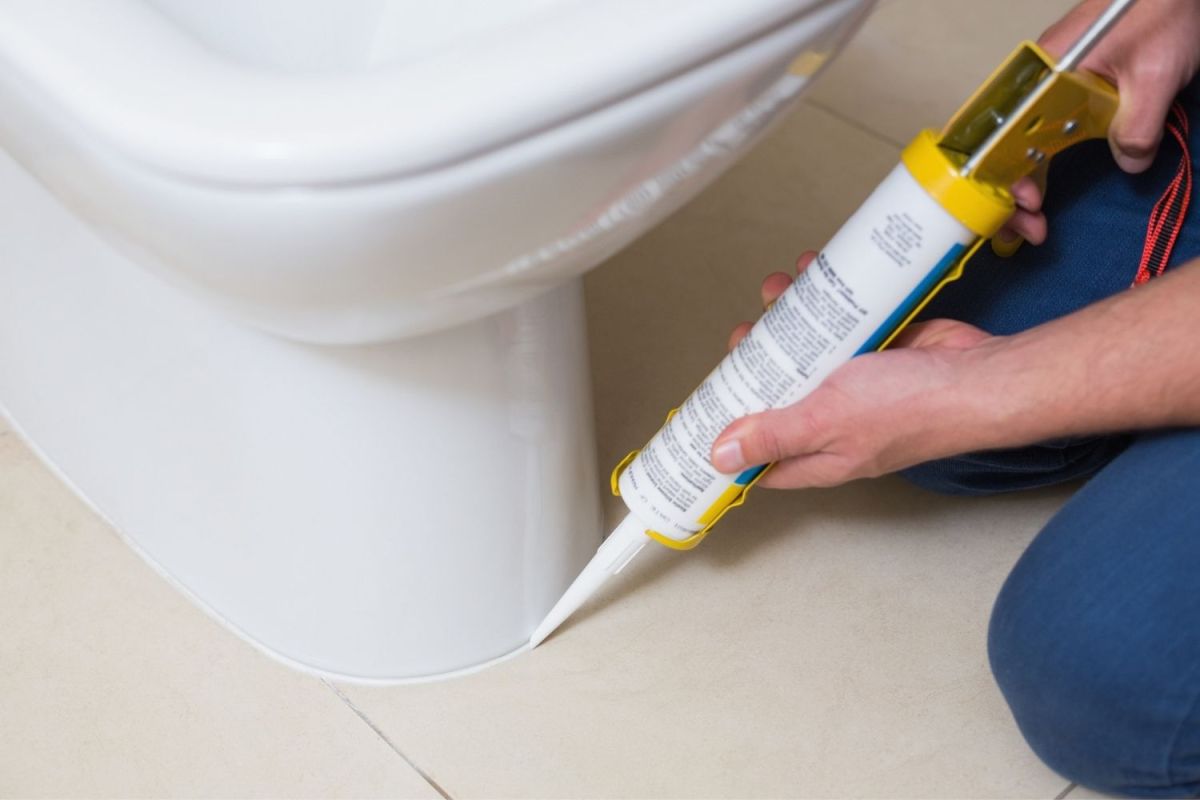
Toilets: to caulk or not to caulk?
1mon 22d ago in diy@slrpnk.net from www.bobvila.comThe American wax ring designs seem like a good candidate for crappy design post in one of these places:
asshole_crappy_design@slrpnk.net
crappydesign@discuss.tchncs.de
Floor-mounted toilets in the EU put their outflow out the back of the toiletbowl parallel to the floor, not below the bowl into the floor. Even if you have a bad mount that causes the toilet to wobble, it won’t leak. But if it did leak, it would be trivially detectable.
Is the US design putting cosmetics above function? Is it that they want to hide the sewer pipe entirely? I suppose if I were installing a toilet in the US, I would look for a wall-hung toilet. But another comment suggests those are rare in the US too.
pure silicone, the clear stuff that smells like vinegar
I believe the stuff that smells like vinegar is special sanitary caulk for bathrooms which comes with anti-fungal properties. Pure silicone is odorless, not for bathroom use, IIUC.

Replacing a bathroom showerpan: $9k+
1mon 23d ago in diy@slrpnk.net from slrpnk.netAmerican wood frame stucco.
To be clear, if I do the work myself, I would likely renovate the existing problematic bathroom. I would try to do a curbless design out of concrete or a wedi kit, but I am not sure yet if I have enough area for curbless. I would add a shoulder height wall and try to avoid having a door or curtains for the shower stall.
If I hire a contractor, I guess I will consider the house extension since the costs are crazy anyway, in which case I would simply abandon the existing shower until I figure out later what to do with it.

plz someone, invent a strap-on pistol that can harvest any can of aerosol to salvage contents when the nozzle fails
1mon 24d ago in zerowaste@slrpnk.net from slrpnk.net
expansion foam pistols vs straws
1mon 24d ago in diy@slrpnk.net from slrpnk.net
homeassistant
1mon 25d ago in diy@slrpnk.net from slrpnk.netI have no interest myself, but if I wanted a home assistent I would take an Amazon Echo (either from a dumpster, or 2nd-hand), and put lineageOS on it to liberate it. The more Amazon hardware that gets converted to a liberated platform, the better. People have done this successfully with the Echoes that have a screen, but the headless Echoes need the same motivation and effort so we can liberate those too. Otherwise they are going to waste.
Incompetent house flippers left me a grenade, effectively, set to blow at the 20 yr mark.
1mon 10h ago in real_estate_talks@lemmy.today
Tired of losing your drill press chuck key? Lanyard holder to the Rescue.
2mon 3d ago in diy@slrpnk.netWould love to find a strong lanyard that uses kevlar/aramid for the string. I use one for keys and the string breaks every 18 months or so.

Why are there 4-pin DC power connectors giving 2 identical voltages? How can they be hacked for 2-pin?
2mon 5d ago in askelectronics@discuss.tchncs.de from www.my-adaptor.comIf I have a device that needs 12v at 8 amps but each pin is rated for max 5a I can deliver 12v at 4-5 amps through two pins and tie them both to the power rail on the pcb to get a full 8a capacity
That’s interesting and perhaps it explains why there would be two 12v pins (so they can be combined to give double the current). But the question remains as to whether “5A max” on the label implies 5A max per pin, or 5A max total when combined.
This image below is not the PSU I have, just something I dug up, but it suggests a purpose for 4-pin connectors that I can understand, as there are two different voltages supplied:

Although I don’t understand what it means to have prohibited signs on two of the pins. Is that a suggestion that they be used as negatives, despite being called “gnd”?
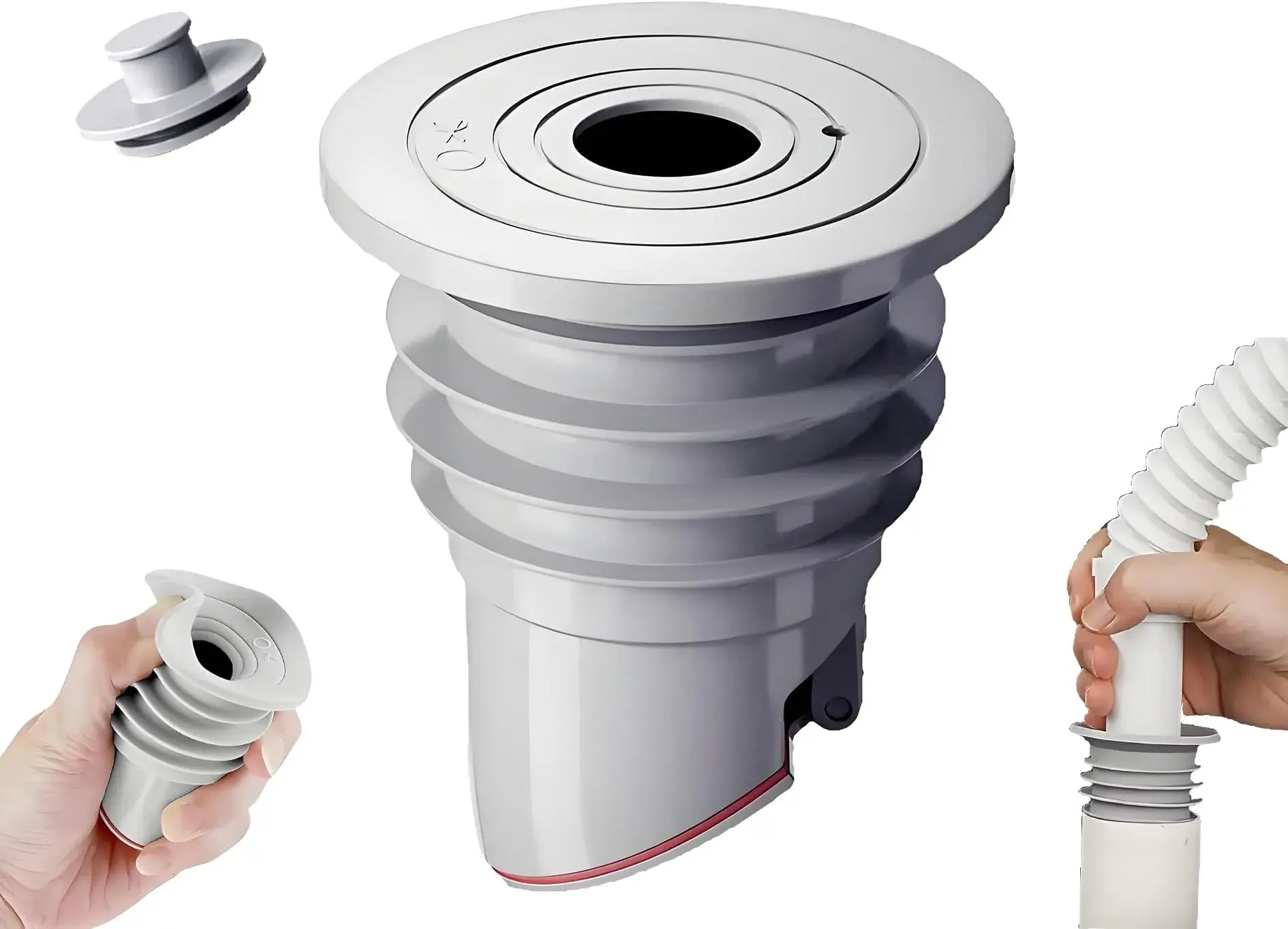
Fiberglass showerpan flexes, drain moves vertically, causes leaking. Got ripped off by a plumber. Looking for a hack to avoid replacing the showerpan.
2mon 10d ago in diy@slrpnk.net from slrpnk.netThe outlet probably turns outward, so it’s not just vertical movement.
Ah, I did not think of that. So I need to scrap the idea of a rigid pipe going into a rubber bushing. I guess an accordian pipe would be the viable cheap hack, apart from some way to add support just around the drain.
Maybe there was some kind of metal support that got left out during installation?
The toilet fell through the floor at one point because (I’m told) the house flippers neglected to use backer board wherever they layed tiles (kitchen and bathroom).
just spent 2 days descaling the urinestone off my toilet bowls. wtf. Do hippies know better?
2mon 17d ago in diy@slrpnk.netLemmy (or Alexandrite) cannot remove an URL from a post -- thus forcing a shitty massive preview
3mon 10d ago in bugs@sopuli.xyz